
Wow! Is anyone else feeling pride in the achievements of Team GB? I am not particularly into sport or athletics, nor even into being a spectator, but I was blown away by the number of medals we achieved and by watching the determination and skill of our young athletes.
Reading the press, one might be forgiven for imagining that all our young in this country are snowflakes – but no way. These young people have come through hell and highwater to be in Tokyo, to perform and to win.
I hope one of the media channels does a documentary covering the life stories of some of these people. I know that many have come through difficulties, have had to crowdfund their way through the competitions, have had broken bones, and gone through many set-backs in the course of their lives. What a wonderful example of determination, discipline, motivation and skill.
I would really like to know more about their journeys from childhood sports days to local then national competitions and on to the Olympics. There’s a lesson for us all in this, in our various walks of life, I feel.
And it takes support – from parents, teachers, coaches, grandparents. And sacrifice. No-one can do this alone.
And the modesty and sheer joy of the winners was poignant to watch. No bragging, just amazement and British understatement. A delight in having won, as if it happened ‘to’ them, rather than that they won through extraordinary effort. From that amazing young girl on her BMX, and daring skateboarders, to equestrian riders of such precision and grace, at one with their horse, to swimmers, runners, cyclists, gymnasts, sailors and more, I am just so impressed.
This is going to be a short piece but it seems so important to take a moment to feel some pride in our achievements. We don’t do it often in this country but watching the Olympics has made me feel that if these people are any kind of reflection of the young people in this country then we shall be in safer hands than I had imagined. There is more grit here than is spoken of on most days. Yet one knows that this grit exists also in our entrepreneurs and those who have been through so many different and difficult challenges over the last eighteen months of Covid.
I hope there is some general celebration of the efforts of our Olympic team, a moment of national pride in coming fourth in the league table against fierce competition. Congratulations to them all, the winners, of course, but also to all those who were beaten at the post. To have got to Tokyo at all is a huge achievement in itself. Well done!
Who would have known that the numbers of Covid-19 cases in our country are as high as they are because we test far more than other countries? I didn’t, until my son happened to mention it to me. Try to look up those statistics and there are very few journalists who have bothered to cover the subject. Hence, we have this dreadful opinion of ourselves, without putting the statistics in context.
It seems that we test 3,322,548 per million population where France only tested 1,485,720 and Italy only 1,222,052 per million of population, with Germany only testing 776,198, as of July 14, 2021. The WHO stated at the beginning of the pandemic that countries should test, test, test. We were a little slow in starting but now, of course, the criticism is that we are testing too much. The app pings but it seems that provided you test yourself daily and have a negative result then, you do not have to isolate, so testing is key to keeping the population safe.
Similarly, we do have a high incidence of Covid-19 (partly for the reason that we test more) but actually Cyprus and Gibraltar have more incidences than we do and the Netherlands and Spain are not far behind. And, according to www.statista.com France has actually been the worst affected country in Europe during this pandemic outbreak, with 5,770,021 confirmed cases.
Our death rate per 100,000 is actually less than Italy’s (UK 191 per 100,000, Italy 211 per 100,000 as of 20 June 2021 quoted by John Hopkins University). But who would know it? I have never heard these figures quoted regularly, if at all, on the news programmes I listen to. Perhaps I listen to the wrong stations?!
The trouble with this lazy reporting, and the lack of will to put numbers into context, is that it leaves our population, and particularly our population of young people, believing that this country is dross and that does neither them nor the country any good. Sure, we have not got great leaders at the moment but that’s no reason to propagate negative narratives about us as a people. It serves no purpose other than to demoralise, and a demoralised population tends to give up or, worse, follow some charismatic leader who promises to get us out of the problem. We don’t have one at the moment but with the culture of identity politics and cancellation, we need to beware if someone emerges to make such promises. From such beginnings totalitarianism can result.
A young teenager, Alex Wilkie, on Radio 4 last week asked that people do not refer to her generation as “the lost generation” as a result of the Covid-19 impact on their education. Labels such as these do nothing to inspire such teenagers to fight for improvement, to innovate and create new enterprises, to work hard because they believe there are still opportunities to succeed, despite the pandemic. To believe in themselves. For self-belief is crucial to success in any field.
The pandemic has been a shock to the young, I believe. Their lives had, even if they didn’t know it, been relatively unchallenging compared to some other generations and other geographical regions. This is their major challenge and it could result in them feeling ‘poor me’ or victimised. But, as the stoics would say, ‘no tree becomes deep-rooted and sturdy unless strong winds blow against it’. This pandemic is the equivalent of a strong wind for our younger population and the concept is that within those storms their roots grow stronger and a tree with firm roots is less likely to blow away. This type of challenge and change can be good for developing resilience in the long term. So let’s not catastrophise the situation. Just look around the world to see many others who are suffering more, with no welfare state, no democracy, no fresh water flowing from a tap, and be grateful.
I can’t imagine what it must be like to be referred to as a ‘disadvantaged child’ or ‘disadvantaged family’. Those kind of labels can limit expectations. They hardly help to make a child or family feel good about themselves. Those who berate this country for a lack of social mobility are simply reinforcing such inequalities when they stick labels on that can impact a child’s self-image.
Then the media all rounded on the UK as racist after the appalling racist tweets posted after the Euro 2020 penalties. These were dreadful but a few ghastly people exist in any population of this globe and a minority of people does not make up a whole population. It turned out from a Guardian report that only 44 of the 585,000 tweets received in the first day or so were racist, and Reuters also reported that the majority, possibly 70%, of racist tweets were generated from outside this country, possibly from a Russian bot. This was mentioned on the radio after a few days but not before we had all had the chance to feel thoroughly ashamed of ourselves, in believing we were all slung into the same racist barrel as a few of the more unsavoury people who live in our country.
Of course, none of this means we should be complacent. Of course, we need to do whatever we can to protect people in the pandemic. Of course, more needs to be done for social mobility and to ensure that racism in whatever form is stamped out and that we come together as a more united population.
And this is my point. To emphasize our weaknesses, potentially without facts being checked, does not help us get out of the mess we are in after Covid. To emphasize our divisions, as seems to be the trend at the moment, does not help us all to pull together to feel that this country, and the people within it, are worth fighting for, building businesses for, creating wealth for, creating opportunities.
I have travelled extensively in my career and also for leisure. We have so much to be grateful for in this country. I know that racism exists in every country in one form or another and one can experience it as a white person in a majority black country. I know that xenophobia, poverty, inequality also exist in other countries. It doesn’t make it right but let’s get things in perspective. There is no need to believe we are the best of the best but let’s not rush to assume, either, that we are the worst of the worst.
Of course we have to review, analyse and adapt new approaches but when people are endlessly criticised and told they are no good and that everything around them is hopeless, then why would they bother? We must give our young people, and in fact our middle-aged people too, for their lives can be very tough, hope. Without hope nothing is achieved.
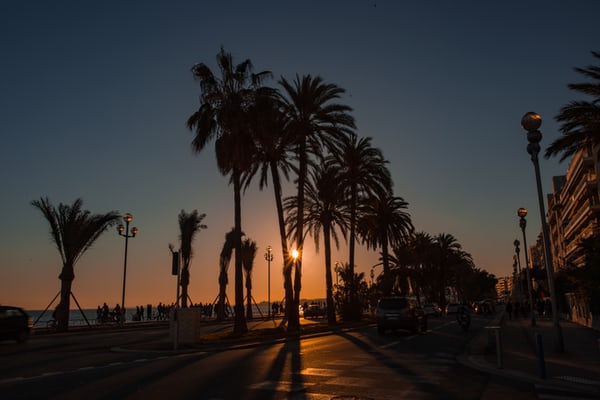
On this summer night I listen to the songs of Brazil, Portugal, France and Italy and I miss abroad. The scents, the tastes, the scenes, the cultures, the difference. That is what matters. When we travel elsewhere, we learn something about life, about humanity. And mostly we learn that we are so similar. We love, we hate, we feel jealousy and empathy, and try to do the best we can. It’s the human condition.
It’s exciting, sometimes, to feel an outsider. Working in Nigeria, the Middle East, or Hong Kong, I had so much to learn about how others respond to information. How they communicate and bond, or not.
I had an apartment in Nice for many years and I would sit on the balcony in the evenings and look at the moon and recognise that we all look at the same sky, stars and moon. We are all in awe of these simple aspects of nature, wherever we are. I would watch the planes come into Nice airport, or traverse the skies over France, and think of the people able to travel across miles of the earth to see family, visit friends, or do business, and I always felt that, despite the potential environmental threat, it was a positive and exotic experience to travel. It brings us together. The view of a plane in the night sky from earth makes it look romantic. Of course, the reality of being sat in one of these cigar-shaped machines is actually pretty mundane. Until you get there…
And then you arrive. In Dubai, or Egypt, in Nashville or Sydney. And the different temperature hits you. Dubai is like being in a fan oven. Phoenix, Arizona too. The excitement of landing in a strange place, getting a taxi across town, seeing the different sights, talking to the taxi-driver about their experiences, talking to anyone one meets in business or as a tourist. Discovering. Discovering those differences of life, how they live in comparison to how we live. No one way is ‘right’.
Tonight, stuck in London, I miss it all. Lisbon, Beirut, Havana, Kerala, Moscow, Luxor, Zimbabwe, and more. The gentle Portugual of my birth, where my sister and I had planned a sentimental journey this year back to the places we remembered as children. I hope we can make that next year.
Remembering running training courses in the Middle East and Africa, knowing and respecting the fact that I must conform to their norms. And loving the differences, noticing them, and hoping I was doing ok to be myself and yet shaping myself enough to their ways.
And my dear friend Sima, who sadly died last year, used to say that I was a different Helen when I lived in Nice. A free spirit, someone new to the Helen she knew in London. I don’t know who that was exactly, and I wonder if you can connect with that feeling of being someone slightly different, slightly more free, able to let go of the old British ways, of the expectations of class or family, and try out different ways of being when you are abroad? I know my father was at his most relaxed, my mother always said, when he was abroad. My brother and sister have both lived away for more years than I have and I know that the three of us, maybe because of our early years in Portugal, thrive on being somewhere different.
Yet, speaking for myself, I also love England. The countryside and what this country offers. Maybe it’s because we are an island nation that we yearn for other spaces and places. But it pains me when so much of what we read and listen to is constantly seeking to criticise everything we do in this country. Which is not, after all, so bad. I know I would prefer to be supervised by our police officers, however flawed, than most others in the world, that I am happy with our inevitably flawed democracy rather than any kind of dictatorship. After all, only 32% or so of the French bothered to turn up at their first local elections. For a political nation celebrating democracy, that is weird, if not dangerous.
But Macron and Merkel are determined to play their political games and stop us Brits from travelling, despite the fact that it deeply hurts those in their own countries who depend on tourism. I read today that the reason that our rates of Covid look so high is that we test far more – as much as 10 times as much – as Germany, and more than France or other European nations. So, of course it looks as if we are doing badly. And we count the Covid deaths of all those who die ‘with Covid’ rather than ‘of Covid’, so they could have been hit by a bus or died of a cancer they already had, but would still be recorded as a Covid death. Statistics have to be studied hard and in detail, as Tim Harford explains frequently, if they are to be understood accurately.
But tonight, I miss the different sounds and the words of a strange language in my ear, the scents of a different country and its people, the way people dress, the fruits sold in the markets, the blossom on their trees and plants. So please, dear leaders, stop making politics the reason why we are stopped from travelling. Science ok, politics, no. People have close family abroad that they haven’t seen for months. And family is what matters in life. When you are in need, it is family who count. So, Boris, Angela and Emmanuel, recognise that the rate of vaccination in the UK is exceptionally high, get your act together, all of you, to get life back to normal and persuade your people to get vaccinated so the world is a safer place again, and we can mingle and learn from one another. I so hope we can do this again soon.
In the meantime, thank heaven, I can dream. Do you?
Have you ever made a mistake? Done something crass or embarrassing that makes you want to curl up in a ball now? Said or done something hurtful? Supported or donated to some cause that you now realize was not what it seemed to be?
Most of us have. And surely this is the way we all learn – by making mistakes. Watch a baby learn to walk and it makes mistakes over and over again until it gets it right. A plane is constantly correcting itself as it ploughs its way through the clouds. We need to continually review and correct ourselves as we plough our way through life, surely, don’t we?
But in today’s judgmental world none of us are allowed to make mistakes, so how can we possibly learn? None of us are allowed to have said anything crass or potentially offensive to a soul all the days of our life or we shall be cancelled or pilloried, and even lose our livelihood at the behest of some anonymous Twitter mob. In fact, the fickle finger of social media will point in our direction until we are fully shamed and humiliated and prostrating ourselves on the floor in penance, even if we were only a kid and knew no better.
My generation would surely never be able to serve in parliament, get published, or support the arts if people understood those awful rhymes we used to chant in the playground, not knowing any better. We would be sent to the equivalent of the Russian gulag for writing books that were shaped by the perspectives and cultural views of the day.
Because, surely, we do learn, generation by generation, to treat one another more humanely and equally and we do this learning through reviewing our behaviour and vowing not to do the same thing again. After all, we don’t put people on the rack these days or guillotine them in the village square. We do have legal acts to support equality and fair treatment.
But the tendency today of sending people to the equivalent of the naughty step, even if they were very young when they made their error, and without any legal process, means that people may be so nervous about speaking up that they stay silent; so nervous that they may get something wrong that they don’t try something new; or so nervous about doing something they feel is right that they take no action, for fear of standing up to the crowd.
I wanted, in the 1960s, to be a member of the Communist Party. My parents were horrified. At that time I was too young but it seemed a utopian movement that could bring equality to all. It was only later, through events, discovery and learning, that I realized that it was certainly not all it was cracked up to be, that there was cruelty, torture, repression, dictatorship and a very real lack of equality. I learnt this over time. I didn’t know it at an earlier age.
Why we live in such a puritanical time I really don’t understand. We have had witch-hunts before in history, certainly, and recently too, in dictatorships. We see it today in China and Russia, where journalists who contradict the government are imprisoned. Perhaps here it is because we have more time than our forefathers to look around us and point fingers at others. It makes us feel so good to believe that we are on the side of the angels and aha, you over there, you have said something nasty or done something wrong, or your great-great-grandfather did, and so you will suffer.
If you look at the corporate sponsors of the arts and of charities, it is inevitable that at some stage that organisation will have made a bad call, supported a client who turned out to be a fraud or worse. So, should we now stop accepting any corporate sponsorships in case way back in their records we might find that they put money into tobacco, DDT, petrol or some other investment that we now know was not good for humankind (and yet had seemed so at the time)?
It’s a slippery slope, isn’t it? It’s challenging enough to put yourself forward for high office, whether in government or organisations, these days. Every single thing you do has to be squeaky clean even if those who are asking the questions may not be so squeaky clean or knowledgeable themselves. The armchair judges spit their vitriol down Twitter or whatever and have some extraordinarily high bar that we are all supposed to reach, even if they are not quite so judgmental about themselves.
Politicians have been lambasted for smoking pot at university but more-or-less everyone smokes pot at uni and then gives it up when they go into the world of work. We have all broken someone’s heart or misbehaved at some stage and regretted it later but, at the same time, known that really it wouldn’t have worked out if we had stayed in the situation. We must be allowed to make mistakes.
Time, surely, to accept that everyone will have done something they may be ashamed of when they think about it at some later stage of their lives and that this is the natural way of the human condition. Trial and error. Obviously if we break the law then the law will judge us and we shall pay the correct penance and should then be allowed to clean the slate, on the assumption that we have learnt our lesson. But if we break the law again, we shall be punished again.
I am not convinced that being forced to grovel by an anonymous group of Twitter followers who shelter their own life record behind an anonymous username is at all healthy. It can just build up resentment and could well lead to people trying either to be perfect (impossible as no such person exists) or to lie and blag. It could certainly result in a society where people are frightened to speak up or do anything that might be regarded in a negative light by all those invisible judges who could send them to the equivalent of the Gulag and deprive them of income and reputation.
We don’t want to live in a world like that here in the UK do we? Can’t we accept that youth is for living, for trying new things and getting them wrong, and also that we never fully grow up to be some perfect mature adult who gets everything right (something children often imagine happens when we become grownup) because in fact we make mistakes, learn and adjust our behaviour every day of our lives until the day we die. And when we stop trying new things, stop making mistakes, we stop learning and become stale. And if we reach that point we have very little to contribute.
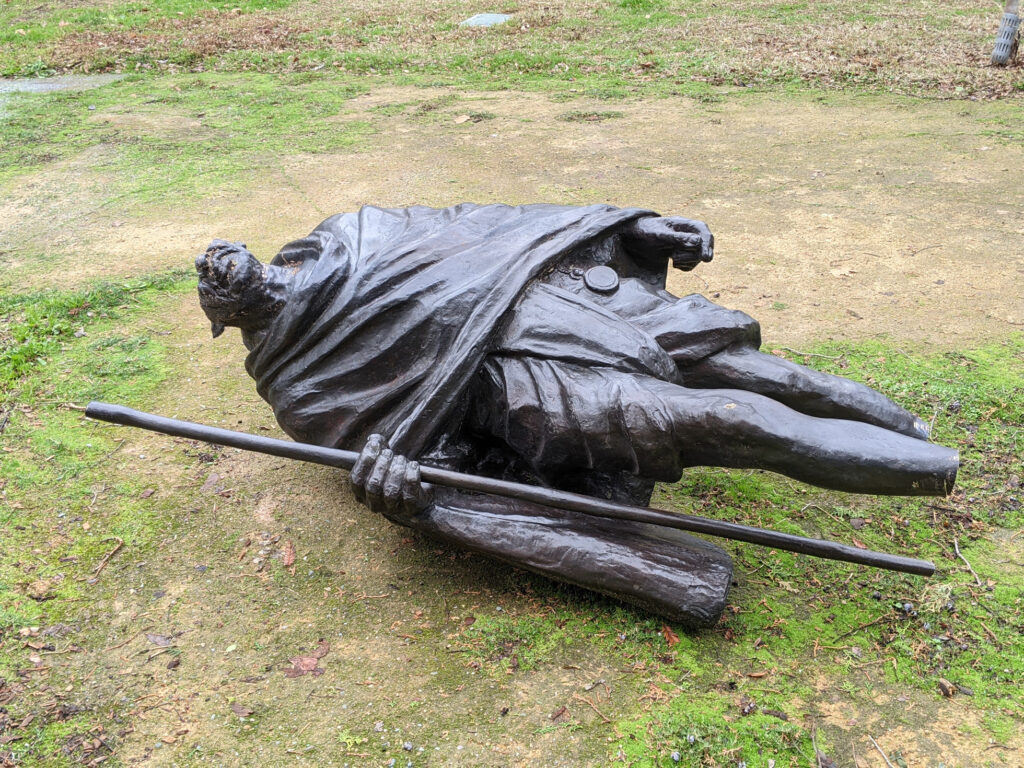
When Gandhi and Churchill are toppled and defaced, despite freeing millions, what human will ever be perfect or squeaky clean enough to satisfy the current arbiters of who should hold office, play sport, give to charity, support the arts, or be placed on a statue? I can’t think of one.