
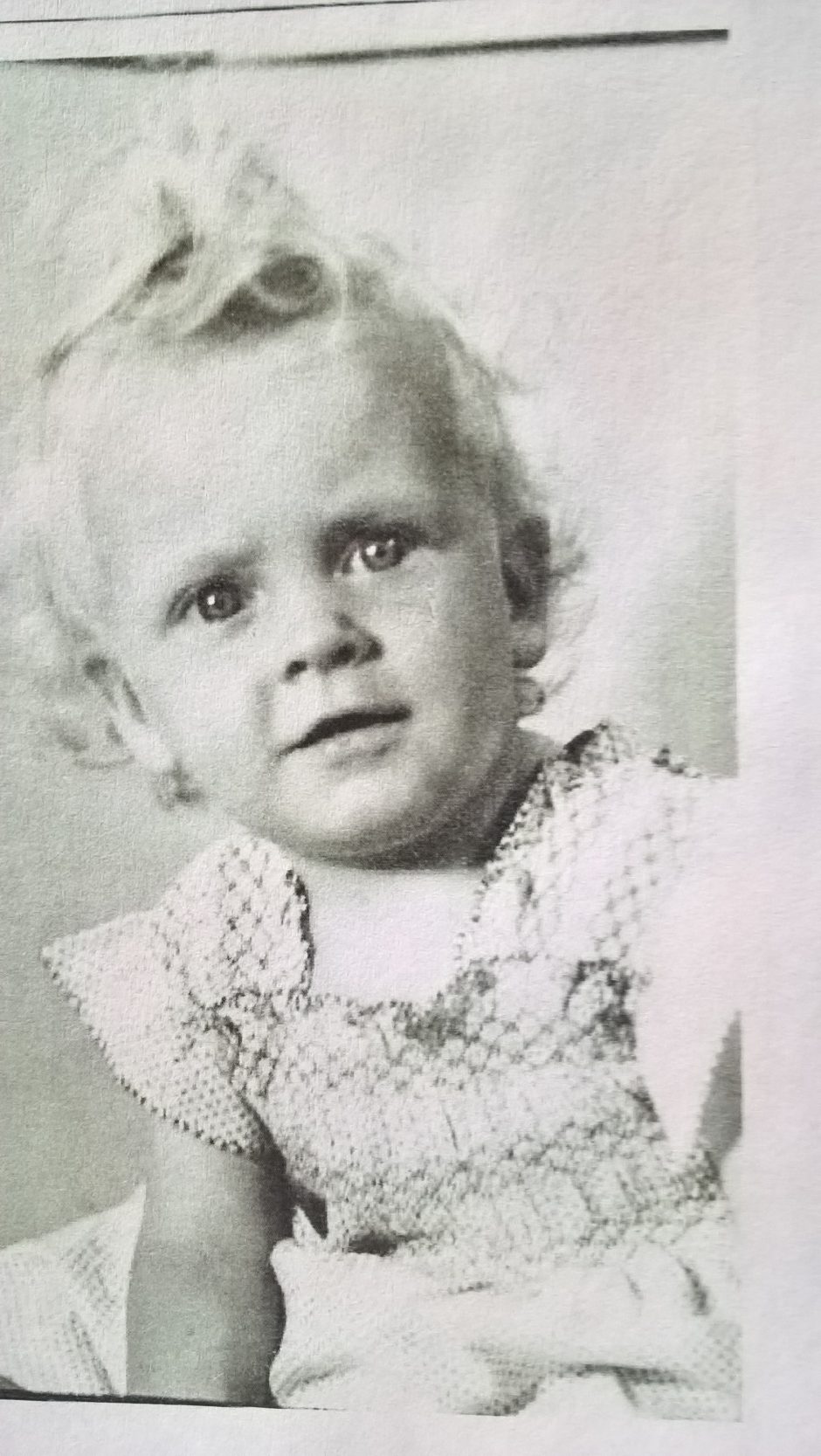
I am about the be 70 tomorrow. How can that have happened? I still feel about 18 on most days – except when I do something stupid like trying to exercise with Joe Wickes. As I struggle to get up from a squat I suddenly remember, oh yes, these bones have been on this earth rather a long time!
It’s fun to look back but also sobering. We are watching Normal People. I am not enjoying it any more than I enjoyed the book. It makes me cringe and reminds me of the time when I really was 18 and falling in love with unsuitable boys, going on dates, teenage parties where there was too much unwanted fumbling. Much of it was excruciating: awkward conversations and the boys you fancied often didn’t fancy you, the ones you didn’t did, etc.
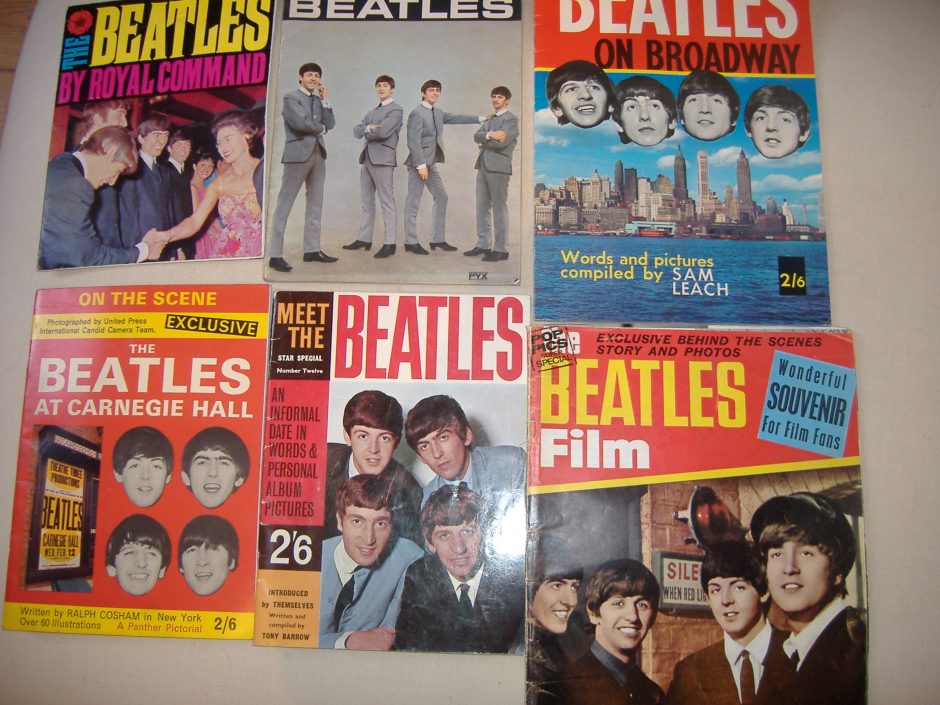
But the music was fantastic. I was Beatles-mad and no. 36 of their fan club – what a talent-spotter!? If I hear some Motown or Stones I can still dance all night, even if I can’t move the next day! But of course we aren’t normal people at the moment so I can’t have a party, can’t dance the night away except in my kitchen with David. And today’s teenagers and young adults are being deprived of those identity-shaping experiences too. They can’t meet up, can’t kiss, or get drunk with their peer group friends. I hope this changes for them soon.
But of course our parents and grandparents experienced worse – long years of separation, no communication, threat of death by bombs, not knowing if sons, lovers or husbands would ever return or would return changed. And so in many ways we are the lucky ones and I hope this period ensures we do not take for granted all the freedoms and pleasures that we have enjoyed over the last few decades.
Do we learn anything as we get older? Returning to Normal People, the series has sparked a debate in The Times between James Marriott, who argues that the raw emotions we feel as young people shape our identity, and David Aaronovitch, who argues that it is when one gets older that one feels emotions more deeply. I think I wandered around in a fog when I was young. Things seemed to happen to me without planning. There was little reflection or understanding. Inevitably, as I have gone through life, I have experienced the great highs of love, motherhood, grandparenting, friendship, of career and of the amazing places I have been fortunate enough to visit. But alongside that, the pains have, I believe, felt deeper, the losses and bereavements more poignant. And our identity continues to be shaped, shaken and stirred throughout our life. It doesn’t stop when we reach 21.
I didn’t have any sense of a ‘career’ until I was about 42. Work was just something I did. I didn’t give it any proper thought in terms of a trajectory. I would have loved to have been a foreign correspondent had I been brave enough. But I wasn’t. So I worked with books, in publishing. I always made sure that it was interesting, and that the people I worked with were stimulating, but I didn’t think about the future at all really. Yet amazing things happened along that journey.
And so now what? In lockdown I am discovering all kinds of ways I have to adapt. No cleaner, for a start. I know it is lazy of me to say this when I am retired and should have all the time in the world to clean the house but I simply don’t enjoy it. And maybe someone else needs the money, so I am happy to give it to them. I am now fed up with cleaning the kitchen floor for the nth time and the pile of ironing fills me with fatigue.
I have learnt to chat, organise our book club and residents’ committee meetings on Zoom. I have just started to become a virtual babysitter for my 4 year old grandson, Max, via FaceTime. Of course, his parents are in the house but as they work full time, should both of them have business meetings concurrently, the iPad gets turned on at Max’s end, I have mine on here and we play ‘virtually’, me with my toys here and him with his toys there. He has even worked out how to call me himself now, and, amusingly, how to mute himself so I can’t hear what he says!
What do I hope for now? Gratitude takes one a long way towards contentment I have discovered. I feel so lucky to have met the people I have met, family, friends, colleagues, clients and acquaintances of all kinds. Look around you and count your blessings. It changes the shape of your day. I am also thoroughly grateful to those of you who have the patience to read these blogs and to those of you who respond, though that is by no means a requirement.
Right now I hope life starts to get back to normal so that our young can keep their careers and enjoy the pleasures I have enjoyed. I long for our theatres, galleries, museums and concert halls to be open again. We are so fortunate to have this amazing resource of talent and skill here in the UK. We can’t let it die as a result of Covid. I hope the young can one day travel to the far distant places I have been lucky to visit, by environmentally-friendly transport systems. And I long for us all to be able to be together again in family groups and friendship groups. I never thought I would wake up to this kind of world on my birthday, that’s for sure. We have lived through post-war austerity, recessions and more austerity but we ain’t seen nothing yet, I fear. Hold on tight!
In the meantime, we have updated my poetry website, www.babyboomerpoetry.com which is, as you will see, a trip down memory lane of some 70 years. There are some reflections of ‘Normal People’ type moments here too. Take a peek, it might remind you of some happy or even cringe-worthy memories too…!
Keep well.
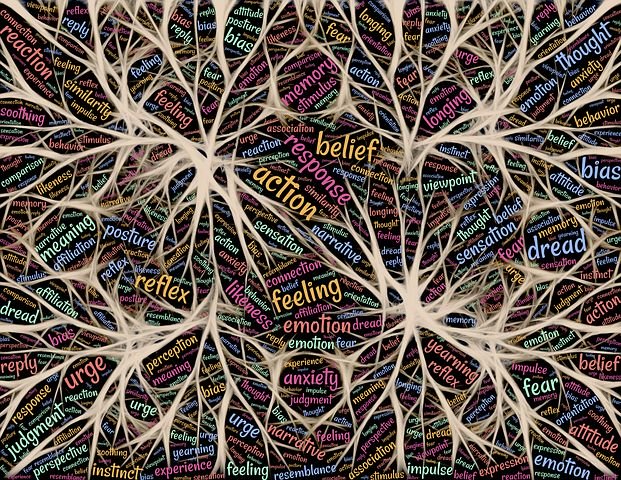
‘Use it or lose’ it is the key message we receive about keeping our brain on top form. So how will these weeks of screen-based experience affect our neuronal circuits? We are social animals and yet now, for the most part, are carrying out both family and work engagements online. Well, thank heaven, as even five years ago I don’t suppose we would have had the technology to keep companies and teams working together on projects in quite the efficient way that they can today. And yet it is just not the same thing, is it?
A friend of mine who lives alone wrote poignantly this week “it aches having no touch of human flesh” and that is the crux isn’t it. Touch is a basic human need. Babies who do not receive loving touch can die, so without it we can wither. In many homes across the world isolated people are aching for human contact beyond the screen and there are weeks of loneliness stretching ahead of them. There’s a silence of battling along through the longing.
And I wonder what it is doing to children’s brains, not to interact with their friends and peer group in the real world? The tussle of the playground and classroom are where we build our identities and come to understand why we get along with one group of friends and not with another. We then build our close networks of support – tribes, or however you like to describe them. Chatting online to friends is simply not the same as the rough and tumble of school life, especially as young children are not always adept at phone conversation.
Teenage years are when the brain goes through radical change, trimming away at neural pathways that are no longer needed and building new ones, as new information and events occur in the young person’s life. For girls particularly, the rich chatter of girlfriends is key to building a sense of self and also of support. It’s a time to share experiences of growing up, first bras, first periods, confidences, fears and excitements. Social media, as we have learnt, can be both wonderful and terrible, a great source of support and fellowship but also a hell of bitchiness and vitriol. How much harder to navigate this when one is not actually seeing one’s close friends in the flesh but sitting alone in a room, isolated. However much one might receive love from parents, it is not the same thing as that camaraderie of friends.
The brain has plasticity, which means it physically changes according to the tasks we give it. It is well known that London black cab drivers have a larger network of neurons around the area for spatial awareness. But should they change career, so their brain will adapt and change, as all our brains do.
So what will these weeks of screen do to developing brains, I wonder? We already hear of the tendency for teenage boys to isolate themselves in their rooms to play endless screen-based games. In Japan this phenomenon is known as hikikomori and over half a million young people, boys in particular, have been identified as shunning social contact. Studies in Japan, South Korea and Spain have found a link with internet addiction. This kind of pattern could too easily develop as habit in many teenage boys across the world now, as sports and other companionable activities are closed to them. Making boundaries around screen time will become all the more important.
We have been reading the neuroscientist Professor Susan Greenfield’s essay “You and Me: The Neuroscience of Identity” published by Notting Hill Editions, in which she investigates what happens in the brain as we build a sense of identity. She is interested in consciousness and how much develops unconsciously from our environment but she also describes her observations on how screen-based activities shape our brains, just as any other activity does so, but potentially differently in the two-dimensional world.
In the context of Coronavirus, for example, if young people spend six hours a day in home-schooling compared to face-to-face school learning, how might that alter the way the brain adapts to the information it receives? The majority of information enters us through our five senses and, in a classroom, a child is hearing other people, sensing their physical presence, listening to a teacher impart knowledge, asking and answering questions, feeling their body on a chair, perhaps exchanging glances or smiles with others in the room, maybe tasting a glass of water and I suspect we can all remember a sense of the smell of the schoolroom? In my case I can remember the sounds of the playground, echoing hallways, teachers’ whistles, the ghastliness of Bronco toilet paper and an all-pervasive smell of over-boiled cabbage! Screen-based learning is better than nothing but certainly is not the same holistic experience, which I would prefer any day, cabbage and all.
As a business trainer I know that everyone in a room gained so much from the live interaction of a workshop environment, information shared by me but also knowledge and experience shared one to another, quite often in the form of jokes or amusing stories. So much learning was gained in the room, and there are plenty of studies to demonstrate that the more senses that are used in education the better the memory of that information.
But the other problem about screen-based activities is that there can be objectification, particularly in games where so often the violence implicit within the game would be totally unacceptable in real life. Yet because it is on screen there is a detachment from empathy and a focus on the often brutal and cold result of winning, activating the dopamine and serotonin systems that also play a part in addictive behaviours. The fast pace of these games and activities could be a reason for an increase in Attention Deficit Hyperactivity Disorder (ADHD) as the young brain is exposed so frequently to a world of fast action-reaction. The kind of books my generation read as children are now regarded as far too slow and boring!
Unlike in real life, these games do not have a consequence in the real world, so it is easier to detach from any sense of reality. A study of 1400 college students in the USA a few years ago showed a decline in empathy over the last thirty years, with a particularly sharp drop in the last decade. Studies have not so far showed any direct causal link but it doesn’t take a lot to realise that two-dimensional screen time will inevitably be rewiring the brains of our young and it is wise to keep an eye on how they develop their social skills in the real world.
This is not in any way intended as any kind of rejection of technology. It is absolutely marvellous – within boundaries. I have been using Zoom for meetings and it works very well, though I am aware that for those who are shy or awkward it can make people feel ‘on the spot’ in a way that sitting around a meeting table does not. Yes, many working people will continue to work remotely after this is over but I also know many others who directly miss the creativity and shared problem-solving that you experience when you are in the same office as team members, colleagues and clients.
FaceTime and Skype are marvellous inventions to keep families who are separate in touch and see the faces of children and grandchildren but I long to be in the room with those grandchildren and be able to giggle with them and hug them again. I have two friends who have recently become grandmothers and are aching to hold their new grandchildren. Then there are other grandparents I know who simply can’t manage the technology and so miss out. And this is not to mention those having babies in these circumstances who may not be able to have husbands or partners with them. Nor the heart-breaking end of those dying in hospital or care homes without the comfort of a loving hand.
And it isn’t just relationships. Other factors feed our minds and souls. Theatres, movies, concerts are cancelled. And so again, the technology comes up with brilliant methods to screen live performances of National Theatre plays, Met operas, classical and pop concerts. It is marvellous … and yet it is just not the same as being there.
As Darwin pointed out, as a species we survive by adapting. And adapting we are. I thank God for the techie brains that can create and develop this amazing software that keeps us in touch and keeps us learning. I also thank God that our brains can adapt with care, thought and compassion in this current situation as I see and experience an inspiring number of acts of kindness and consideration. Under the surface of our courage there is fear, pain and longing and this, also, will be building patterns of neural circuitry. We are complex creatures stirred by thought, spirituality and emotion. All can be a source of comfort. So let’s embrace technology but at the same time remember that our human links to others are precious and essential to our wellbeing.
Just as our brains are now adapting to screen-based communication, we shall need to consciously reboot them back into face-to-face contact once this pandemic is over. And, just like if we don’t speak French for some time we get rusty, this may take more focused effort both for we adults and for our young. But how great will that be! Keep well.
It’s day 10 of feeling totally pole-axed. I have never experienced such utter fatigue in my life before. But of course they are not testing you, unless you are Prince Charles or some celebrity, so I don’t know if I have Covid-19 or not. But I suspect I have.
It started with a cough and a relatively mild set of symptoms. After a few days I started to feel aches in my joints and muscles and my temperature went up. At that stage, though, I felt well enough to potter about the house, call friends and family, and do the ironing.
It was last Sunday when things turned for the worse with my temperature going up further, shivers, coughing, aches and dizziness. But I don’t mean sick enough for me to go to hospital. No, just to feel totally isolated from any kind of medical help because 111, whom we had phoned when David showed his first symptoms, told us just to stay at home. Then when I tried to call just to check out my own worsening symptoms, I hung on for nearly 2 hours but gave up. Our GP surgery just refers us to 111 so there is no back-up. This leaves one feeling alone in more ways than one, with far less medical support than one would normally have. I don’t envy those who have conditions that need attention.
But of course I see that it is those who have major breathing difficulties who must get priority. The rest of us who are merely staggering from bed to bathroom with no energy even to even pick up the phone to a friend, must wait to get better. Hopefully. And I am one of the lucky ones as I have a doctor in the house. He can’t cure my symptoms but he does a good job of bringing me soup and cups of tea. My heart goes out to those in the NHS caring for the critically sick.
What has been marvellous, though, has been the kindness and care of our sons. We have six between us! Every day there is a call asking for a progress report on our symptoms, how we are doing, whether we have enough food, whether we are going nuts yet. As a parent it is such a special feeling to experience the tide turning as the young look after us and ensure our wellbeing.
When the self-isolation factor first started to hit home I felt incredibly sad. My son called and I sobbed down the line about how much I would miss my lovely cosy times with them and with the grandchildren, the school runs, the bath times, the outings, the sleepovers. Patiently and kindly he talked me through it “Mum we want you there for their 16th birthdays… this is just a few weeks. Try to think long-term.” It’s lovely to feel that they really don’t want us to peg out, even though several of my own generation feel we would sacrifice our own lives for the financial wellbeing of our offspring.
Atal Guwande in his book Being Mortal said that it helps to have daughters as one gets older. I feel much comforted by the care our sons have shown us in these last few days, including delightful bouquets for Mother’s Day, dropping off soup and bread and tasty delights on our doorstep. Daily calls and FaceTime with the children. It’s like receiving a giant hug from both our families.
Neighbours also have been extraordinarily kind and generous. Our immediate neighbour dropped off homemade pasta sauce, muffins and fruit, another friend some delicious cake, other friends ask frequently whether we need any provisions at the shops. We are blessed to live in Layton Place where there is such a strong sense of community.
Luckily Ocado has delivered for us and will be doing so again this Friday. Not sure how it will go after that as when they first started their online queuing system, I would find myself at the end of a queue of 6500 but when I looked today the queue was 27,500! But hopefully some of those people who have been laid off in the hospitality industry can now be redeployed to help with deliveries.
It is those who live alone who most concern me. It takes a lot of determination and creativity to amuse oneself and not allow spirits to drop into despondency and loneliness. I hope friends and family will keep calling them as we are, indeed, so very unfamiliar with our own company in a world where we have been able to pop out for a coffee, a sandwich, a walk, a gallery, a movie… and now we have none of those things to call on.
I thought David and I might amuse ourselves with a jigsaw puzzle – little did I realize that most of the jigsaw puzzles on Amazon would already be sold out. Great minds! I just long to have enough energy even to do a bit of adult colouring. Right now I can do nothing but sleep and cough.
The annoying thing is that I had just joined the Vitality Health policy which includes incentives to keep fit via points towards an Apple watch, special discounts at Virgin Active. For the first time since we moved to Kew I was really enjoying going to Virgin Active in Chiswick Park and working out and swimming. And now I am ill and can hardly move. How frustrating. However, as this bug removes all hint of an appetite then at least I should not be putting on weight. Hopefully once it lifts David and I will be able to revert to some home exercising.
I may feel sorry for myself right now because I am ill but it is the young I really worry about. Their careers and financial wellbeing have been thrown into complete disarray as the world comes to a halt. Thank heaven for technology and all it can do to keep companies operational, for teams to continue to meet online and carry out their work remotely. We shall need everyone to be ready to get up and running again once this period is over.
I wonder how my grandchildren will remember this time. They are used to such an active life of friends and activities in comparison to our own childhood. And I certainly don’t envy parents trying to encourage their children to sit down and home school. What a task!
We shall get through it all, no doubt, but there will be loss and tragedy in the midst of survival. And we shall be changed at the end of it. It makes our world even smaller and more integrated. Now, as well as a butterfly flapping its wing in Brazil potentially causing a hurricane in Florida, we shall also have to watch out for unsavoury practices in any small market of the world and be aware that it could wipe us all out. Each one of us as individuals holds a responsibility for the wellbeing of others throughout the world. We shall, I think, learn more about global love, compassion and care, hopefully. And about grit and determination. And probably creativity. Keep well everyone.