
As most of you know now, I wrote my novel No Lemons in Moscow inspired by a literary tour of Russia in 1990. When I returned there in 2016 we were shown around St Petersburg (as it now was) by a guide called Sergei. He was a gregarious man and told us much about the city and about Russia. I asked him whether he was able to speak about anything he wanted to say now and he replied “Oh yes, absolutely,” then paused and said “but my mother worries about me saying too much. She and her generation have fear in the blood.” This was a chilling thought, imagining how frightening it must be not to be able to speak up for one’s beliefs or opinions without the threat that the State or the police would overhear you and arrest you.
My second thought was wow, Fear in the Blood is a great title for a novel, although I had no intention at that time to write one. And so when I started to write the book in 2020, its original title was Fear in the Blood, as I felt it encapsulated how anxious one would feel on a daily basis and how limiting it would be on one’s actions and conversations to sense that everything you did was being observed and judged. It could lead your nervous system to becoming attuned to threat to the extent that you were never truly free to be an individual. Individual thought and creativity were, after all, barred under communism, and writers, poets, artists and academics had been sent to gulags for daring to express original thought.
As to the title, it was only when I met up with Ian Drury, a literary agent at the Winchester Writers’ Festival, that he pointed out that it could lead potential readers to believe that the book was a thriller, with blood and bodies on the carpet, which it isn’t. And so, with the help of Adrienne Dines, with whom I worked to shape my story, I changed the title to No Lemons in Moscow because, as I recorded in my diary at the time, there were no lemons in Moscow or Leningrad in 1990.
Thinking back over this yesterday I suddenly realised that we may well be in danger of having our own fear-in-the-blood moment here in the West. Here, the very place that thought it had learnt so many lessons from the consequences of the terrible groupthink that overtook Nazi Germany, followed not so long afterwards by the revelations of what living under communism was really like when the wall went down in Germany and bit by bit Eastern Europe was released to freedom. During this period we came to realize how limited people’s lives had been, unable to speak their minds, unable to travel or learn from others beyond their borders. But of course our young were not alive to witness this and so, when I read that the Generation Zs wish for ‘strong leadership’ I realize they know not what they ask for. They have not seen or heard the stories we have heard from history, the way strong leaders generally impoverish their people for their own gain, how creativity is stifled, how we all end up having to think the same.
I have just finished reading Konstantin Kisin’s excellent book An Immigrant’s Love Letter to the West. He is a Russian who came over to the UK and became first a stand-up comic but was horrified when he was asked at the Edinburgh Festival to sign a contract to say that he would not offend anyone and would be kind and sensitive to everyone in his audience. He could hardly believe he was standing on UK soil not Russian soil, being asked to sign this when, of course, comedy pushes the boundaries and what offends one person will not offend another and inevitably you can’t be kind to everyone because if you are kind to one person another may suffer. And so he refused and he has written his book telling us loudly to wake up to what is happening to us here in the West, to how forces we may not be able to understand are busy undermining our institutions, our social cohesion and wishing to disempower us for their own ends.
He and others are pointing out, as I have been doing in my blogs in my own small way, that we are in danger of losing all that we have built up over the last few decades. There are several articles this week, in fact, pointing out that the DEI policies of Diversity Equality and Inclusion are actually resulting in the opposite. That instead of welcoming diversity of opinion and perception, academic institutions and corporations are limiting what people can say, resulting in utter conformity of thought in a truly Orwellian way. Students in universities and pupils in schools are reporting that they feel nervous of expressing an opinion in case it does not conform to current trends, whether on gender, race, empires, the Middle East, etc. Certainly, I know people of my own generation and younger who feel they are being judged for questioning this Orwellian Newspeak that is being mirrored on the mainstream media as much as in the classroom, where teachers have been sacked for expressing a viewpoint. I actually wrote a blog about it some time ago, wondering whether we would all be locked up by our grandchildren for expressing thoughts that seem perfectly normal and legitimate to us but outrage them!
The world is being turned into the concept of the oppressed and the oppressor and yet, as I have said before, this omits to acknowledge how powerful a position it is to be the oppressed, the victim, and throw blame and shame all around you. That is not to say that of course terrible things have not been done in the past and continue to be done all around the world but Konstantin Kisin’s point, reiterated by many others recently, is that people living in the West, whatever their colour or creed, are living in better conditions than any other human generation before them and we need to appreciate this and hold on to the quality of life that we have built up. Are there problems? Of course, and we can continue to learn and develop but if we can’t even see what is in front of us and how fortunate we are, then we shall never be able to preserve the best of what we have created.
So here comes 2024 and may this please be the year we move beyond this limiting groupthink and speak up for freedom of expression, for respectful debate where each of us can stay in the room with someone who has a different opinion to ours and feel perfectly safe to listen and learn from them instead of blocking our ears to opposition. May this be the year where we stop the hypocrisy of promoting diversity when actions, laws and policies denote the opposite. May it be the year when we recall recent history and the moments when we have shouted “never again!”.
Finally, may we recall the story of the Emperor’s New Clothes and call out those who are denying scientific or biological facts. If people truly want tolerance of many different ways of life then may they too allow for this because tolerance or inclusion or whatever you want to call it is not a one-way street. It’s give and take. You can’t say you want diversity but only if everyone thinks the same way as you. That is a contradiction in terms. Let’s please wake up to this.
Oh, and if you haven’t yet read my book you can buy it here!
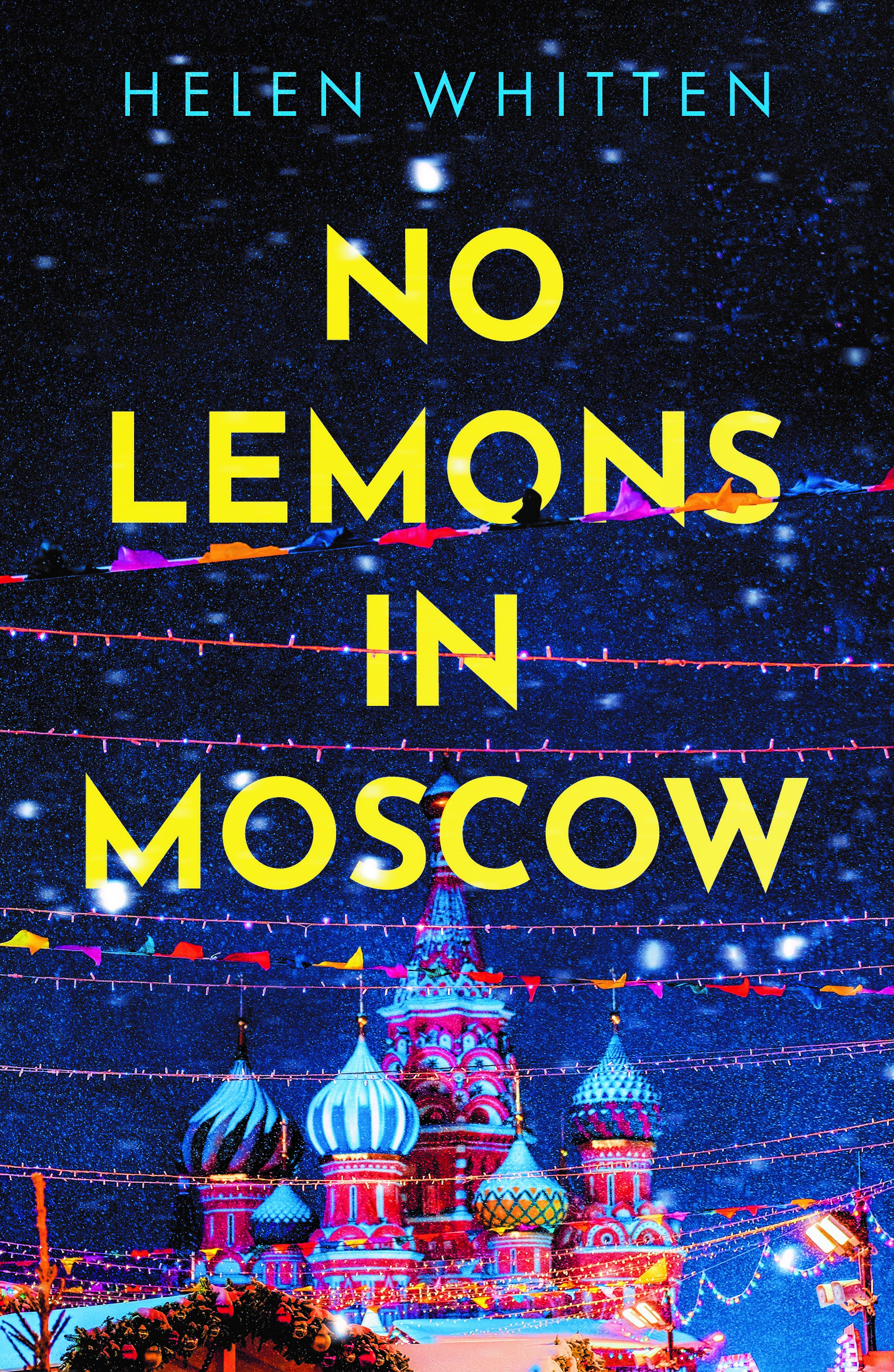

A friend I knew in my teens reminisced recently that he remembered me bursting into a pub or café full of ideas and conversation from the latest book I had been reading. And I guess that is what I love about books – how they inspire ideas, take you to other worlds, into other characters and even better to deep conversations with other people on these topics. And so I am hoping that my own novel, my debut, No Lemons in Moscow, will do this for other people.
For those of you who are writers, would-be writers, or part of a writing group, the process from which my novel began was an interesting one. In our creative writing class we were asked one week to write a list of twenty events or experiences that had been extraordinary in some way. I included seeing the sunset go down between the pyramids on horseback, being with both my parents at the moment of their death, and a literary tour of Russia in 1990.
The following week we were encouraged to take one event from that list and write about it more fully. I chose Russia in 1990 and realised that it had changed my life and sense of myself. I had met extraordinary people and had my mind opened up to life under a communist regime. I wrote about meeting a young Russian in a bar. He had fought in Afghanistan and wanted to start a restaurant but couldn’t grasp how this could be possible. I explained that he could go to a bank, borrow money and pay it back as he made a profit. “Impossible” was all he said. He was unable to get his mind around free enterprise.
The following week the tutor suggested we fictionalise some aspect of what we had written about. So I created the character of Kate, a London woman coming out of divorce who goes on a literary tour of Russia in 1990. There she meets Valentin, a young Russian who wants to become an investigative reporter – a far more dangerous career than starting a restaurant! She falls in love with him and from there she gets into various situations that take her way out of her depth as Valentin wants to expose corruption in the Gorbachev and post-Gorbachev era. A risky business, as we evidence from the journalists we read about who are locked away in cold prisons.
The book is set within this context of the socio-political background of Russia 1990-2003 and follows, also, Valentin’s sister Anya as she battles with a lack of food (no lemons) and her wish to start her own health food shop. I started to write in May 2020 and after many different edits and versions I finally sent the typescrit to the publisher in April 2023. It was published on 28 November 2023.
It was only when the book was published that I began to think about the various themes of ideas and conversations that could arise from the book. That might sound strange but when I was writing it, I was so focused on the story and characters that I wasn’t thinking about what book clubs might discuss. Now I realize there are many different themes for discussion and these are just a few:
Identity – Kate is coming out of a bad marriage, divorcing, and needs to reinvent herself as a single woman, single mother and discover how she will pay her bills. Russia is coming out of the era of the break-up of the Soviet Union and needs to reinvent herself in the world. Both Kate and Russia as a country have to consider who they will be now, how they want to present themselves to the world. Russia in 1990 was full of hope yet has gone down a different journey to the one we expected at that time. I wrote a blog once about identity being a verb and not a noun as we have to reinvent ourselves often and at many different stages of our lives.
Loss – Kate has lost a baby and her grief infiltrates her daily life and her nightmares. As many other parents, she wants to set up a charity in her son’s name so that no other mother has to experience the care she did. The theme of loss also raises the question of how that loss impacted her marriage, as it often does. Instead of bringing a couple together it can push them apart should both parents grieve in different ways.
Love and how it fits within a relationship where one of the couple has a driving passion to change the world as Valentin does with his wish to expose corruption. We see this happen with Navalny, with Khordokovsky, Litvinenko. Stand up for what you believe in and you can be put in prison for years, or killed. Inevitably this has an impact on intimate relationships and those who love you.
The contrast between life in the UK and life in Russia. The 1990s were a time of recession in England and yet the shops were full of food in a way that simply wasn’t the case in Russia. And post-Gorbachev the Russians came to London to invest their money in property. Kate’s best friend, Eve, in the book, is an interior designer busy making money from this Londongrad period.
Parenting a teenager as a single mother. The book suggests some of the emotional pulls that occur after divorce, the slight edge of competition and jealousy between exes as they relate to children and offer them different experiences, and then the inevitable pull away of the teenager to want to make their own life. How does a mother cope with being thrown back on herself as her role as mother lessens and the child leaves home?
These are just a few of the themes I now realize I weave into the book. You may find more, or different ones, as you read the book. Inevitably each reader comes to a book with their own history, their own interests and perspectives and each person is likely to pick up slightly different topics of interest. That is the fun of a book club, if one chooses a formal setting, or just a chat between friends, as I used to have with my teenage friend. Either way, I really hope you enjoy the book.
No Lemons in Moscow is available from Amazon or from Troubador Publishers or your local bookstore.
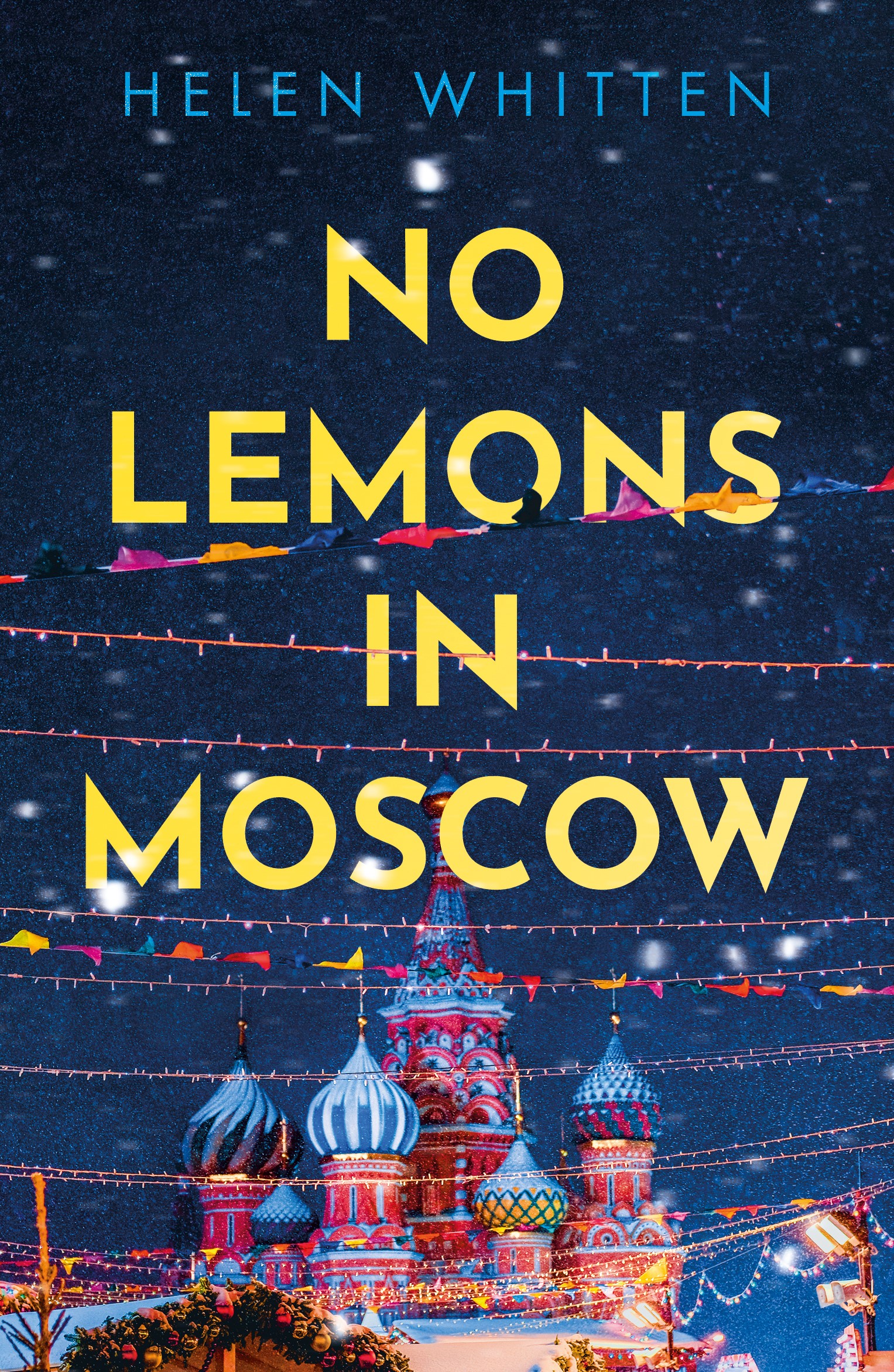

This afternoon there will be a vigil for peace in Central London. People of diverse faiths, ideas and political beliefs intend to stand together for peace, Muslims, Jews, Hindus, Christians, Conservatives, Labour, LibDems and many more. They are requesting that people do not bring flags or placards but just themselves and stand there to support the wish that we do not allow ourselves to be divided by events in the Middle East or, indeed, other parts of the world.
Most human beings want a quiet life and for their children to grow up in safety. But sadly there are those who use religious or other ideology to turn one of us against the other. In the last few decades we have been experiencing a barrage of disinformation via social media, particularly, that is designed to disrupt and divide society in the West. These people want to degrade Western values and civilisation and somehow make us apologise for the progress we have made over so many centuries but look around the world and consider what other civilisation would you prefer to live in, what other values would you prefer to live by? That’s not to say we can’t learn and adapt, as we do, but I think we need to be aware that many of those who are creating these messages are by no means our friends.
Let’s be alert to this propaganda, wherever it comes from. Let’s be discerning and make up our own minds, do the research and analysis to work out what we personally really think and feel rather than being influenced by some social media platform or the people shouting the loudest.
There was evidence this week that TikTok are inundating young minds with pro-Palestinian messages and, as we have seen in recent weeks, the young are vulnerable to such a call. They inevitably will feel sorry for those who feel oppressed and, as I have written before, victims actually hold a great deal of power to influence minds on their behalf, whatever the facts. And journalists have also shown that these young people, when interviewed, are not necessarily well versed in the facts of this very complex situation. It’s hardly surprising – many of us find it thoroughly difficult to appreciate the events that have led us to the situation that is faced today in Gaza.
But shouting for hatred, rage, or the destruction of a country or race does not get us closer to peace. “Jaw-jaw not war-war” was the phrase used by Sir Winston Churchill to promote the need for discussion. So far over the many years since World War II there have been many attempts at peace in the Middle East but they have not reached any long-standing result, although there was a level of ceasefire before the Hamas attack on Israel of October 7th. Both parties feel victimised and oppressed but finding the way through to peace will take moving beyond that and the trouble is that the Hamas charter states that they want the destruction of Israel and so unless the Palestinians eradicate the influence of Hamas it is regrettably unlikely they will reach a settlement any time soon.
And in the meantime the Palestinian people suffer, as civilians inevitably do in warfare – we saw terrible destruction not so long ago in Homs, Syria, in Iraq, in Afghanistan, in Ukraine, and, further back in time, throughout the world during World War II. I can’t claim to understand it all any more than a lot of other people, but it would seem to me that the Palestinian people would themselves benefit from the end of the Hamas regime and the election of leaders who have their best interests at heart, though those marching through our streets recently didn’t seem to give that impression.
Either way, my main point is that there are several narratives that have been going around over the last few years that are absolutely designed to divide us by class, gender, sexuality, race, skin colour, religious or political beliefs but we do not have to allow ourselves to be manipulated in this way. We can stand together for peace in the world, we can agree to disagree on political or religious beliefs but respect the other person’s right to have an opinion. Where one person is accused of being uncompassionate you can realize that perhaps they are being compassionate, but to another group to yourself.
No one of us holds the secret to life or the ultimate truth of any situation. We can all learn from each other and there are plenty of Jews and Muslims in the Middle East and elsewhere who are working together for peace. Let us support this narrative now.
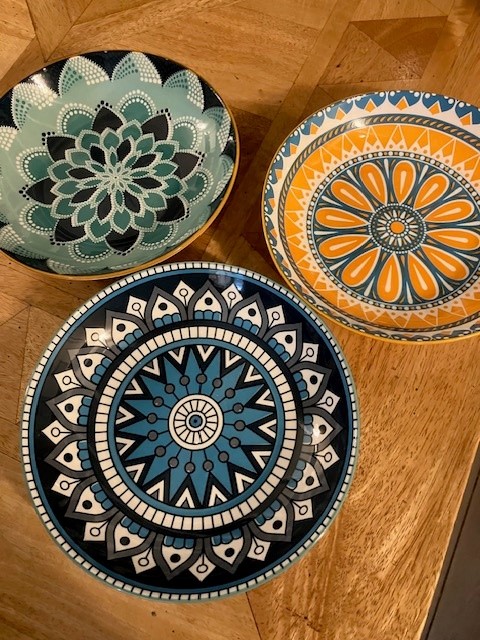
Every time I eat from these lovely bowls my sister Sarah gave me I wish I had told her how much I enjoyed them, and how many other people commented on how pretty they were. I forgot, and now she is gone.
When she was dying in her hospice, I was going to write her a letter to explain why I loved her and talk about all the things I was grateful for. As a teenager, when my mother was ill at home, she took me to Gorringes and bought my school uniform, put me on the school train, introduced me to the glamour of her and her friends living in Chelsea, took me to my first Cary Grant movie. When my son Daniel died of a cot death she lived around the corner and was there for me, to talk about it, to help me manage the aftermath. When my son Oli was terribly ill as a baby in St George’s she took my older son Rupert, aged 2, into her home late at night while the doctors did tests on Oli.
That’s what a sister can be. They aren’t always, and I am not pretending everything was perfect because of course nothing in life is perfect. But it was pretty good. As a young girl I found her a bit scary – she was that rather sophisticated teenager of the late 50s with bouffant hair and stiletto heels and what did I, a mere 8 year old, know about any of that? Nothing! But as we grew up into adults we lived near one another in Kensington and then South West London – Putney, Wandsworth, Wimbledon, East Sheen, and spent a lot of time together with the little cousins.
Over the years she listened to my woes and my challenges in business, though I don’t think she understood the difficulties of being a single woman running a small training and coaching business. I don’t think she knew any more about this kind of career than my mother did. But she listened. I know she didn’t always approve of my actions or my decisions but no more did I of hers. That’s siblings isn’t it? And it doesn’t take away the fact that you love one another.
I did tell her I loved her as she lay in her hospital bed, and she told me the same. I was going to write all this down but I didn’t. Why not, I am not totally sure, and so that is why I am writing this – don’t hesitate. Life can jump surprises on you. Here is a poem I wrote her https://www.babyboomerpoetry.com/poems/sisters/
And so it is my brother and I now, and I have much to be grateful to him about as he never made me feel unwelcome as the younger sister joining in on bike rides with his friends, or going to parties together, or playing endless games of L’Attaque or Cluedo or whatever, and more recently has been a huge emotional support to me in the various changes in my life.
So this blog is short and sweet. Think of those you love and tell them you love them but more than that. Tell them WHY you love them as it really helps someone appreciate the qualities and gifts that they have and can share with others.
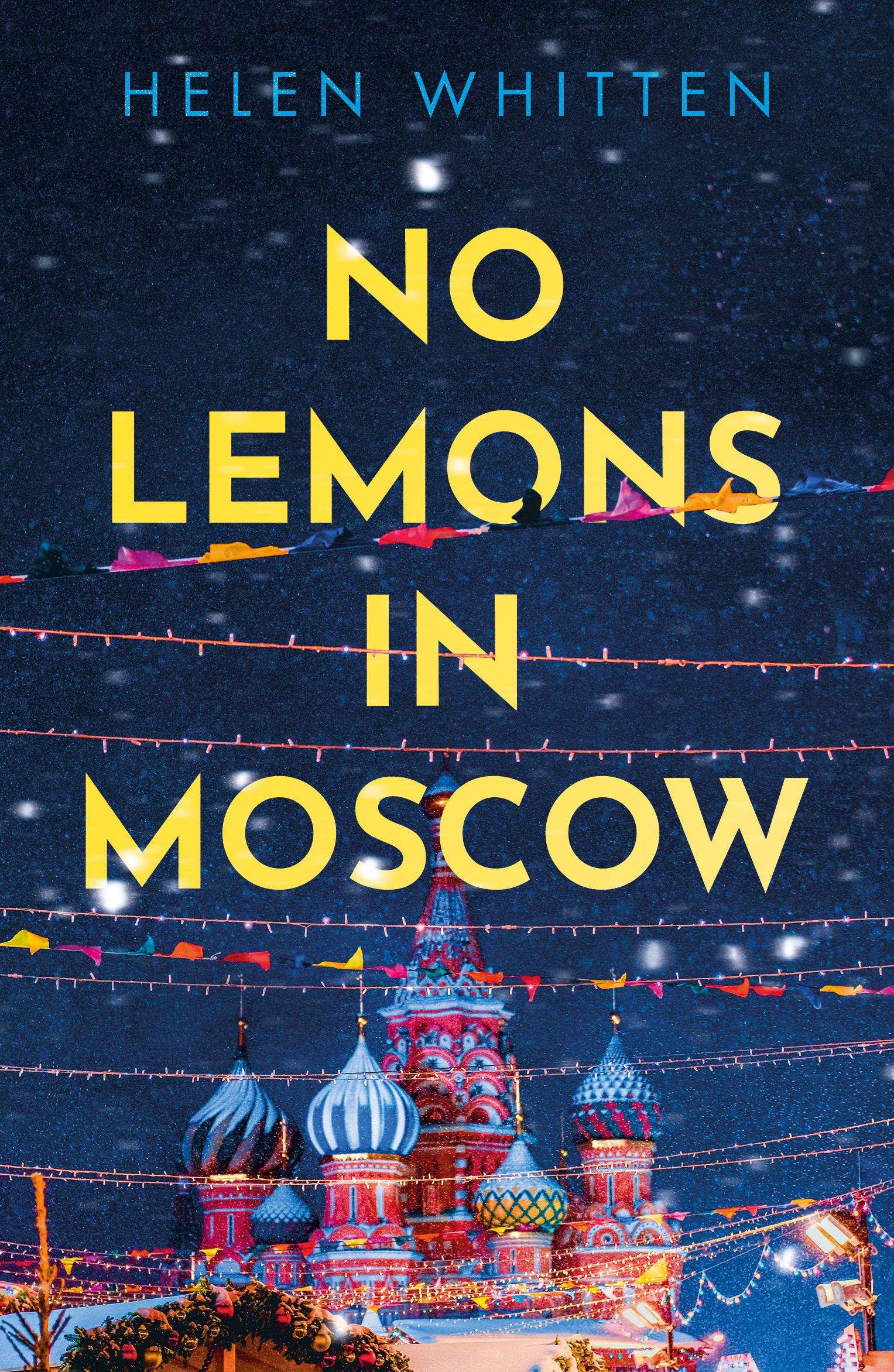
I publish this article now partly because I want to sell my book (of course!) but also because WE MUST NOT FORGET UKRAINE in the midst of the Israeli-Gaza war. If we forget Ukraine, Europe could become a very different place and we must remain mindful of this, as well as seeking peace in the Middle East.
I returned to Russia in 2016, visiting Moscow and St Petersburg 26 years after my first visit in 1990. At that time I was on a tour organised by Auberon Waugh’s Literary Review, to visit the Russian authors’ houses and discuss Russian literature, which I had loved since I was a teenager. I was travelling alone, part of a group of some 20 people all with an interest in Dostoevsky, Tolstoy, Pushkin, Turgenev and Chekhov, among others. We met for the first time at Moscow Airport and were greeted by a country at the very depths of economic austerity. There were no lemons or oranges in Leningrad (as it was then) or Moscow – hence the title of my novel No Lemons in Moscow – and there were lines of drab-looking people outside any food store, queuing to find a chicken, loaf of bread or a half-dozen eggs for their family.
The food we ate on that tour was disgusting – weak chicken stock with a few pieces of pasta or an egg, indeterminate meat or fish. So our group spent the next ten days supplementing our diet with black market caviar and vodka. These were sold on the street by young boys or by hotel waiters, who charged us $5 for any purchase, although we had to wrap our dollars in napkins as it was illegal for them to possess American dollars.
During the day we stimulated our minds with Russian literature and at night we drank vodka into the early hours of the morning, talking about life. I unashamedly weave some of these experiences into the novel but the protagonist Kate is definitely not me and the book is fiction not fact.
For the population of Russia at that time Gorbachev’s era was a difficult one and he was an unpopular leader due to the food shortages. So perspectives of leadership are interesting, as whilst the West saw him as a good influence and key to ending the Cold War, the Russian people were, quite literally, starving. They were also conceptually unable to understand that they could, in a capitalist world, get loans and start their own businesses to work their way out of poverty. Years of rule under Tsars and Communists had taken away their ability to perceive creative options. The Cold War had seemingly ended, the Berlin Wall had come down the year before but the average resident of Moscow found life tough.
And what a difference 26 years made. In 2016 our visit started in Moscow where we oldies were very competently chaperoned by the 21 year old daughter of our friend. She was on secondment to Moscow University, studying Russian. She was impressively fluent and also able to gain the respect of waiters and to ensure that even the most scary-looking taxi drivers did her bidding. The latter drove at 100 kpm along multi-laned city streets – like Lewis Hamilton on a suicide mission. I just shut my eyes and sighed with relief whenever we got caught in the huge traffic jams we encountered both in Moscow and St Petersburg; although the drivers still constantly switched lanes at least we weren’t going quite so fast.
Russia in 2016 was flourishing in comparison to 1990. There had been investment on infrastructure, the hotels and restaurants were buzzing, young and old were better dressed and there were French and Italian designer boutiques in the GUM department store and elsewhere. With organic and health food cafés on almost every corner one could easily have been in L.A. The museums, chapels and the Hermitage had been restored and there was a sense that the Russians were way better off than they had been before.
And so it was easier to understand how Russians seemed to perceive President Putin to be a good thing. Contrary to 1990 where the West saw Gorbachev as an ally but many of the Russian people distrusted him; in 2016 the West viewed Putin with trepidation but the Russian people seemed (from our short glimpse) to be happy with what he had done for their country on the inside. Whether they were or not is always difficult to tell in a country under authoritarian rule.
With May 9th coming up on our 2016 visit we also witnessed the build-up of troops and tanks in preparation for what they coyly called the “theatrical celebrations” of the end of World War II. Red Square was transformed with banners of hammer and sickle; the square outside the Hermitage filled with thousands of marching soldiers and the narrow road outside our hotel became blocked with tanks, missiles and warheads. When I sent photos of these scenes to others and mentioned my concern, one response was “OH come on! What’s menacing about a few nuclear missiles and nerve gas weapons in the hands of a psychotic? Don’t be pathetic…!” and another: “show me a stable democracy that still feels they have to parade military equipment to the rest of the world”. Since the invasion of Ukraine, of course, Putin has threatened us further with these nuclear weapons.
But the old fears of how much people could express opinions or not remained in the air. We chatted to some young girls wanting to practice their English. They were aware that it was illegal for them to download English movies and therefore had to log in with an IP address registered in the Netherlands. “Perhaps one day the authorities will find us” they giggled nervously. And when discussing press freedom with our guide he looked, for the first time, uncomfortable and told us of how his mother berated him for talking too much. Raised in the Stalin era he described her generation as having “fear-in-the-blood”. And yet, he said, the young can’t really imagine what life was like in previous eras and history is buried, along with the records of Chernobyl. I believe this is even more true of Russia today.
Security was everywhere on my second visit – in the detail required for a Russian visitor’s visa, the x-ray machines as you exit airports, enter railway stations, museums and shopping malls. This makes me consider now whether we are adequately protecting our own department stores and galleries from terrorism, especially after the Just Stop Oil protest at the National Gallery recently and the sad divisions we are seeing on the streets these days.
In idle moments I have wondered whether Putin has been reading Machiavelli’s Prince, the effective ruler needing to be “a fox to discern snares, and a lion to drive off wolves.” Machiavelli’s rule that when seizing a principality or state “the usurper should be quick to inflict what injuries he must, at a stroke” triggers images of Crimea and now Ukraine, although he has been more hampered there than he would like. Putin uses propaganda to seek the approval of his populous, it not being wise for a leader to expose himself to hatred as this signifies an inevitable and premature death or end-of-rule. The Prince has relevance also for the oligarchs and new leaders of businesses in Russia. Machiavelli admired the self-made man who rose from humble backgrounds advising them to learn how to be sensitive to the dance of power between ruler, powerful elites and a general population. Leadership is a balance between strategy and action for the benefit of a business or country but can require tough decisions We now know that Putin does not shy from such toughness and the oligarchs tread a dangerous path if they stand up to him.
When I left Leningrad in 1990 I left with the impression of leaving an inefficient country. Banks ran out of money, Post Offices had no stamps, restaurants had no food, wine or vodka, our coach driver lost his way between Tula and Orel because he had no map. On our last day, as we sat on the runway waiting to take off, the BA pilot explained that we had been delayed because the Russian Air Traffic controller had removed his earphones and was looking the other way. The pilot had tried waving to get clearance. Eventually someone else in the tower alerted the controller, who allowed us to take off. I remember thinking it a fitting farewell to a disorganised region.
The same was not true in 2016. We took off on the dot and there were plenty of lemons in Moscow. But, with Putin in the Kremlin, I was not sure I would sleep well at night. In 2023, with his invasion of Ukraine I know I was right to be fearful. Let’s not allow the tragedies occurring in the Middle East to take our focus off Ukraine’s plight. There are children being kidnapped there too, and if Putin succeeds there, who knows what he will do next in Europe.
My novel No Lemons in Moscow is available from your local bookshops, Amazon, Kindle and Troubador Publishing.https://www.troubador.co.uk/bookshop/contemporary/no-lemons-in-moscow
I understand that ITV is the latest in a series of companies to demand that their staff notify them of any inter-company relationships. How awkward and embarrassing is that? At what stage do you notify your manager or HR – “I fancy x in Sales”? or “y and I went for a drink last night”? What does it all mean and why should a company tell its staff what relationships it considers appropriate or not? It makes me think of Orwell and the thought police or, worse, the morality police. Don’t we need to be careful of such policies being over-reaching of a member of staff’s freedoms?
All this in an era where Diversity is supposedly celebrated, with the concept that more diverse voices equal creativity and greater problem-solving capacity within departments and teams. Yet the reality seems to be that despite this supposed message there is more groupthink today than there ever was a decade ago. For anyone who expresses concern at aspects of gender critical ideas or critical race theory or certain political ideas, flirts a little, or dares to make a joke can be silenced, limited, even lose their jobs. So they don’t really want you to be free, do they? They really to want you to conform, which is the opposite of what stimulates creative thinking.
And limiting your ability to fall in love is restricting indeed. This trend began back in around 2005-6 when I had the following letter published in the People Management edition of 31.8.06 entitled ‘Let Love Blossom’, written in response to an article on the problems of office relationships in their edition of 10.8.06.
Dear Sirs,
The “Working Ardour” article made me wonder how realistic it is for companies to have policies that try to prevent office romances. Love is where it falls – you can’t always choose a neat and tidy place; it seems to choose you. With people working long hours, making relationships outside work can be difficult. As a coach many people tell me that they are too tired at the end of the working day to have the energy to go looking for love. With a falling birthrate and many more single people it seems to me that organisations should be supportive of romance for the health and wellbeing of the individuals concerned – and also our society.
If a genuine professional or regulatory reason exists where an actual or perceived conflict of interest between the private and professional lives of a couple might occur, then there should be a mechanism to enable the couple to make a confidential disclosure of the relationship to a senior manager or compliance officer.
Where relationships are discouraged, dishonesty is bound to occur, and the chances are that the organisation risks losing or alienating two talented people. An organisation can realistically expect that the couple concerned will act professionally and with discretion. Beyond that I would say it is none of their business. Helen Whitten, Managing Director, Positiveworks Limited”
I would stand by what I wrote then. We are not talking here of sexual predators, stalking or bullies, who obviously should be stopped but where all too often there is wilful blindness, especially where a senior member of staff is concerned. We are talking about consenting adults, people coming to work, working hard and falling in love with someone who is likely to share some of their interests. Why should there be some kind of school register for these relationships? It seems to me to be thoroughly intrusive.
The birthrate is falling dramatically across Europe and the world. If relationships, heterosexual or gay, are limited through authoritarian red tape hampering their natural course, there will be even fewer babies born or adopted. Then AI will really need to take over!
So many successful relationships and marriages have started in the workplace. Who are HR to stop them? Isn’t it time for a rethink on why this is necessary for the majority when it is likely that only a small minority might cause a problem? Similarly, I would argue that it is time for a rethink on the whole diversity and creativity issue as removing freedoms will inevitably limit creativity and lead to groupthink. Time to stop these overbearing regulations and treat people as responsible adults able to express opinions and choose their own partners without nanny interfering.