In the Surrey woods the boys cycle over the muddy path, spraying mud and water over their pals behind them. The muddier they get the faster they cycle, the wetter they become. The trees echo with their laughter.
In South Kensington the teenage girls from the French Lycée walk home along Queensberry Place. The heavens open. Rain pours down their cheeks, soaking their clothes. As one, they run into the street and dance in the rain, spinning in circles, twirling their arms above their heads, as if the rain were broadcasting a song into their ears. Hair blowing in the wind, they pirouette all the way down to Harrington Road, their laughter ricocheting around the grey-soaked buildings.
In Queen’s Park the toddlers run in their wellies and jump in the puddles, their merriment spreading to all who watch them. Water sprays in all directions and flows over the top of their boots to soak their socks and feet. Faces turn up to the rain as they laugh and jump together, competing to create the biggest splash.
In Nice, people congregate at the beach restaurants in autumn sunlight to enjoy their soupe de poissons, moules marinière and Côtes de Provence. Others stretch out after their meal and watch the sea wash over the pebbles as the sun warms their skin.
In the Heathrow Terminal the November rain and fog delay the plane. In London it is 5 degrees. In Bahrain it is 30.
In the Bahrain seminar room, the doctors meet to consider their communication styles and the stress that their work puts them under. The air-conditioning is so cold that the men –they are all men – wear their coats as they listen to the lecture. They come from many countries: Yemen, Egypt, Afghanistan, Kuwait, UAE, Turkey, Lebanon. They discuss their medical training, some of it with the NHS in London. They are sure of themselves, urbane, travellers of the world, healers of people.
In the restaurant the Egyptian cardiologist, dapper in his Jermyn Street suit, enters the room. Beside him is a dark shadow, a figure enveloped in black, her eyes alone visible. His wife. She sits a little apart, does not speak. As she eats, she lifts her niqab to bring her fork to her mouth, fragments of food catching on the black cloth, falling into her lap. We cannot see her expression, nor hear her voice. We cannot ask her what she feels.
In Kew a group of teenage girls sing pop songs at the top of their voices as they walk home through the chilly night air.
In Kabul girls confined to their homes remember the soft touch of nature, the walks to school with their friends. Beyond their windows the season turns from heat to bitter cold.
Below is a poem written this November by Samreen, an Afghan girl, and posted by the poet Kate Clanchy on X see @KateClanchy1
Dear Imagination,
mango tree that blooms in the drought of my heart. You help me find beauty in the cracked walls of my life, like wild tulips growing from stone.
When the four walls of my home close around me like a mountain pass in winter, you become the wind crossing the Hindu Kush, carrying me
to the life my heart keeps sketching in secret. You place saffron fields beneath my feet, open a thousand caravan roads inside my mind.
I feed you with my breath, my hunger, my sleepless hours. More than bread in my stomach, you keep me alive.
Samreen
You can read more poems by Afghan women and girls on Kate Clanchy’s X platform
In his report on NEETS – young people Not in Education, Employment or Training –Alan Milburn admits that whatever policies he introduces will take a good decade to bear fruit. In the meantime, we need to empower these young people to believe in themselves and their future. Referring to them as a potential “lost generation” or “the left-behind” generation is, in my view, unhelpful. It just increases the sense of panic that they are victims of circumstance and that their situation is uniquely terrible. Even the term NEETS is negative. How about SEETS – Seeking Education, Employment or Training?
I believe it is important to change the messaging. Yes, this generation certainly has specific problems but the catastrophising language that the MSM, social media and government are applying simply emphasises their lack of agency. What we need to do is to empower them to believe they can succeed, despite the circumstances. There are several ways I think we can help them do this.
Every Generation Has Faced an Uncertain Future
May I suggest that teachers, mentors, journalists, parents and government representatives teach some history? Help these young people to imagine what it might have been like to be my grandfather or grandmother who lived through World War I and II, who faced the problems of living through the great depression of the 1930s. Help them to imagine what it might have been like to be my parents, who got married on November 24 1939, in their early 20s, on the brink of war and, like so many young couples of their time, were separated, faced bombs, fear and uncertainty. Help them to imagine what it was like to be a young person trying to rebuild this country after World War II – I remember passing huge bomb sites when we visited London and other cities. More recently, the global financial crisis of 2008 created unemployment reaching 8.5% in 2011. And then perhaps imagine being a teenager in Ukraine. Human ingenuity and resilience can come to the fore in the midst of challenge, as gradually people learn new skills, developed new organisations.
Life is always uncertain. We never accurately predict the future. No-one, in my grandmother’s time had the benefit of the NHS (my mother had her tonsils out on the kitchen table). People did not predict how the computer and technology revolution would transform our lives, let alone AI. Yes, there is inevitable suffering in life but the will to survive drives us forward. As the saying goes “all things will pass.” Life moves on and even if new innovation looks as if it may take all the jobs, the opposite is sometimes true. New ways of doing things can also create jobs.
Context and perspective can empower individuals to believe that the past is not necessarily going to be a predictor of the future; that they can say, “Yes, I have this problem but thank heavens I don’t also have that problem.” Gratitude really can help people open their eyes to what they do have rather than what they don’t, which helps them feel more confident and optimistic – and optimism is essential if they are to apply for work or set up a business.
Change your thoughts and you change your life
It’s easy to get into a downward spiral of negative habits of thinking, behaviours and actions. We are deeply habitual creatures and so if someone sits at home alone in a room for a few days it becomes harder for them, whatever their age, to get out and talk to people or try something new. I wrote two other articles on this subject:
Thoughts influence feelings and so it is helpful to encourage a young person to identify some of their negative thinking. For example, if someone thinks “it will never work” or “everyone thinks I am hopeless” that is likely to make them feel more anxious. If they are feeling anxious, their breathing changes into their upper chest, their voice becomes constricted and they are less likely to appear or act confident.
Notice generalisations and dramatizations like “nothing is going my way” and ask them whether they can think of just one thing that is going their way. Then build on that.
Changing thoughts takes practice – it is literally like learning a new language but if they can convince themselves to feel the fear but try it anyway, and train themselves to think “I will learn more from giving it a try than I will from sitting at home” then that impacts emotions, behaviours and actions. This is where the fear of failure can paralyse but taking an action, even if it doesn’t work out, can breed confidence because they can tell themselves, “at least I tried”. Step by step small changes of thought, behaviour and action increase confidence.
Recognise that feelings are infectious
I read today that 45% of NEETS report having a work-limiting condition. This is a huge figure, and it is hard to understand how this outcome has occurred, but it is also important to remember that any diagnosis does not have to mean they cannot achieve success. David Blunkett wrote an article in The Sunday Times recounting how his blindness did not stop him deciding he would find a way to make a career for himself. It takes patience and determination, and the ability to face failure and adversity but to keep on trying can lead to a sense of fulfilment even if the precise goal is not achieved.
Emotions are infectious. If one person in a group says they are anxious then it can stimulate anxiety in others through peer empathy and groupthink. If one person cries others often find tears in their eyes. Likewise, if one person says they are excited about something others can catch their enthusiasm. I should know, I was a Beatlemaniac and if one girl screamed at a concert we all screamed!
And yet within any peer group there may actually be many different levels of an emotion but there can be peer pressure, especially as teenagers, to all feel the same way. That may or may not be helpful and requires self-awareness. Help them develop the ability to observe others and not automatically feel they must feel the same way as them.
Group Support and Networking
Being out of work, education or training can be isolating yet in order to find work it is necessary to build social skills and to network. Volunteering can provide a focus and is useful in a cv. Building a WhatsApp Group and meeting in person to chat and support one another could be helpful – though it is important that these meetings are not just a general moan. Use the time to talk about what they can do and what is helpful rather than what is not. Use the time to practice interview skills and get feedback in a non-judgemental environment. The reality is that the more people who know someone is looking for work or training the more that person’s network builds and this could lead to someone – perhaps a parent or the employer of a friend – being able to offer them some opportunity. That opportunity is far less likely to appear if they stay hidden in their bedroom.
In these groups they can help each other ask coaching questions like:
What are your skills?
What are the strengths you have gained through your childhood? Even a difficult childhood can give people strengths, skills and perspectives that others may not be able to offer.
What would you like to be doing in 3 years’ time? Why?
What do you enjoy spending time doing or thinking about?
What personal qualities do you have that could make a positive difference to an employer and a team?
What do you bring, as a human, that AI cannot bring?
How might you express your skills, strengths and qualities in a cv, job application or interview?
Show us how you might stand and present yourself if you imagine feeling confident.
It’s important that the focus of any meeting, whether in person (preferable as it gets people out) or online is positive – not Pollyanna positive, imagining everything will go perfectly, but rationally optimistic.
Companies and Government can play their part
There are things companies and the government can do to help young people. Companies are criticised for not acknowledging applications or cvs and not giving feedback from interviews. This is ghosting, disillusioning and the person learns nothing. It is better if a human being responds but if this is not possible then it is surely not impossible, in this age of AI, for the organisation to set up an automatic AI acknowledgement of a cv or application to demonstrate it has been read. Equally if someone comes to an interview the transcript could be summarised and AI could provide some constructive feedback to the applicant, if no human is available to do so.
Government can, as Alan Milburn is suggesting, analyse and moderate the benefits a NEET receives. I believe this is a balance between what the state can do and what the young person can do. The message needs to encourage the young person to act. The one phrase I disagreed with in David Blunkett’s article was suggesting that young people say to themselves, “I must be supported in getting a job so that I’m no longer depressed and overcome.” A more useful phrase, I think, might be “I would prefer it if the government arranged a job for me, but I can try to find solutions for myself if they don’t.” This creates a blend of personal agency with external support. Also, it can be a disincentive to have too much of a financial safety blanket. I set up my coaching company Positiveworks in the recession of 1992. I was in the middle of a divorce, moving house and my father was dying but I felt I had to make an income, yet I knew others who had received redundancy packages who had less immediate need to take those critical steps forward.
Government can also take action to review their employment policies around National Insurance, minimum wage, EU freedom of movement, and zero-hours contracts to analyse whether these are ultimately helpful in this current situation.
The Lost Generation? Only If We Give Up on Them
Let’s stop using phrases such as the “lost” or “left-behind” generation or over-emphasising the problems. If you talk about young people as if they are victims, they think of themselves as such and can fall into a helpless-hopeless state of “what’s the point?”
Let’s remind these young people that they are unique, for each human being is unique. They have unique qualities, skills and experiences to contribute to the future of this country. Let’s reassure them that we believe in them and so we hope they will believe in themselves.
We can’t promise them a future without challenge but let’s remind them that there have been worse moments in history and that everything changes, that uncertainty is a fact of life and the human condition is such that we have extraordinary abilities to overcome adversity and make something of our lives. Let’s help them feel excited about the future and feel that they can shape it. Whatever their background or special needs, they can be encouraged to believe that they can make a difference and have something to offer.
Let’s give them the confidence and impetus to feel the fear and take some action anyway.
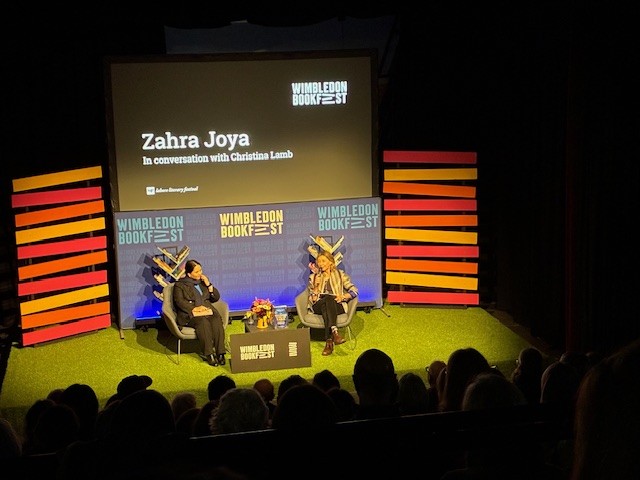
This is what Zahra Joya, the Afghan author of The Vanishing Girl of Kabul: Betrayal, Hope and an Extraordinary Fight for Women’s Rights, told the audience at the Wimbledon Book Fest last weekend as she was interviewed by the Sunday Times Chief Foreign Correspondent, Christina Lamb. And so, this is what I am doing. Again, as I did on July 29th this year in my blog “Why is the World So Silent on the Plight of Afghan Women and Girls?
I don’t know what good my writing will do but the fact that half a population of a huge country is effectively imprisoned, largely excluded from education, employment and public life, in this day and age, is something I find incomprehensible.
How come more is not being done to liberate these women? Can others not put pressure on the Taliban? Where are the voices of men, both within Afghanistan and across the wider Muslim world, who reject this treatment of their daughters, wives, sisters and mothers? Surely they, too, have a part to play in challenging the Taliban’s interpretation of Islam?
Zahra told us of how people commiserated with her parents at her birth. Why? Because they had had a girl. “What a terrible sorrow”. As a grandmother of beautiful granddaughters, I am horrified that people should respond this way to the birth of a daughter, but of course this isn’t just in Afghanistan. Throughout history, girls have too often been regarded as less valuable than boys, despite the immense contribution women have always made to their families and societies.
As Zahra explained, if there hadn’t been a great deal of misogyny in the country already, then the Taliban probably couldn’t have made this happen. There are small pockets of dissent among men, but those who protest risk being shot or imprisoned. And, we were told, the school uniform for boys now resembles a Taliban uniform so the brainwashing starts young.
Meanwhile these courageous and determined girls meet on secreted laptops in quiet rooms and basements. I attended one of these Zoom calls and heard about how each one of them is teaching others anything she knows – a language, grammar, mathematics, a sharing of knowledge between them. Kate Clanchy, the poet who mentors young Afghan girls in creative writing, was on the call and the girls in her classes produce the most beautiful and poignant poetry.
These girls are so articulate and impressive. They represent small battalions of resistance and hope. Yet hope only gets you so far. You need action to make change happen. It is beyond me to comprehend this behaviour or to believe that any religion would wish for half its population to be treated in this way. One thing is for sure, we should not accept any hint of coercive practices here.
So, what can we do? We cannot all change governments or confront the Taliban, but we can refuse to be silent. A war of words, of disgust and dismissal of the Taliban’s behaviour would be a start.
We can write to our MPs, challenge the iniquitous lack of media coverage, support those who are helping Afghan girls to continue their education, and make sure their voices are heard, read The Vanishing Girl of Kabul, if you haven’t yet done so, and share the work of Afghan women journalists and writers.
These young women are not asking us to pity them. They are asking us to stand alongside them. They are demonstrating extraordinary courage in circumstances that most of us can barely imagine.
Zahra Joya asked us to raise our voices on their behalf. Surely that is the very least we can do.
Over recent months we have had pages and pages of coverage, speculation and comment about the end of the Kier reign and the Coming of Andy Burnham yet hardly any major coverage of an evil that is occurring daily in Afghanistan. Have we really become so parochial? Are we not interested, do we not care about the plight of these girls and women, our sisters in this world? Girls who can now be married even before puberty, women who are not allowed to be educated, go out on the streets and have to be covered from view? In this “be kind” world why is there so little compassion or outrage at what is happening to these women? Is it a general misogyny or is it a fear of being accused of being Islamophobic if we speak out against the Taliban? I am bewildered.
I have been reading Zahra Joya’s book The Vanishing Girl of Kabul. I urge you to read it, to wake up to what life is like under such a regime. The utter cruelty and contempt for women and girls dressed up as religious protection. It is a heartbreaking read and yet also an inspiring story of a girl who had to dress up as a boy in order to be able to continue her schooling and who has become a successful journalist determined to expose the iniquities she and others suffered.
Recently I had a enlightening conversation with an Afghan Uber driver. He spoke movingly about how he and his wife, a doctor, and two small children came to the UK and how tragic this situation is for Afghanistan. As he pointed out, if you educate women, you educate children and society because women still, even when they are working, tend to be the ones who encourage their children to read and write and do their homework. If women are not educated the whole of society suffers and poverty will ultimately be the outcome. Afghan men are already having to send more money home and earn more money because of women being deprived of jobs.
He told me that there are educated and professional women now begging on the street, risking punishment in order to eat. He told me how, without female midwives and doctors, who are no longer allowed to work, women are seen by male doctors who do not have the same experience. Also, that many men do not want their wives to be seen and treated by male doctors and so they go untreated, unsupported.
And yet the UN host representatives of the Taliban and the Iranian Government and the UK is silent in its agreement. We see Amnesty and other charities running major campaigns for other causes – Venezuela, Gaza, Japan’s earthquake, etc – but less about helping these women and girls.
It makes me wonder, if there was a revolution here in the UK and we were overtaken by an Islamist regime that required we women to wear the burqa would the world be equally silent? There are those who say why don’t the women fight back but they must be closing their eyes to what is happening in Iran and Afghanistan when women fight back – the shootings, executions, beheadings, lashes and stonings. How easy is it for women, who are not even allowed to talk to one another in the way they used to be, to fight back against guns?
Of course, this raises the thorny question of how can we help them. Western interference in other states rarely ends well and yet I remember well the pleas of Syrians asking us to go and help them, and the media is happy to post articles on how we must help the Palestinians, so why not the Afghan girls?
It’s difficult to get it right but surely there are ways and surely one is not to host representatives of a country that treats half its population in this abusive manner. Malala Yousafazi has posted a poignant message on Facebook questioning why the EU has invited members of the Taliban to Brussels to discuss a migration deal, without firstly insisting that they address the rights of women, which she describes as gender apartheid. She points out that the EU should surely be protesting against one of the worst human rights crises that exists in the world, just as the UN should not have given the Iranian Government any leadership role in their Human Rights Council. You can donate to Malala’s fund supporting the education and rights of women here https://malala.org
In Zahra Joya’s book The Vanishing Girl of Kabul she writes of how her mother and aunts were unable to read and write and so when she went to vote during the brief ‘democracy’, it was with her thumbprint. If a person is unable to read, they are unable to understand for whom they vote, unable to understand a contract that they might be required to sign that might do them or those they love ill. They are unable to read about other ways of living, other lives, of the freedoms other women in the world experience. If they are unable to go out on the street and talk to people they will not even know what is occurring in the next village, let alone in a country far away.
The women in Afghanistan and Iran never imagined life could really transform to remove their freedoms in the way they have experienced. Don’t let’s sit too complacent in our Western way of life and my goodness let’s value and protect all that we have gained over these centuries.
A month rarely goes by without a funeral these days. It’s disconcerting and sad, leaving gaps in one’s family and friendship circles, leaving questions in one’s mind about what might come next, what has gone before, and what on earth the secret of life might be. To be honest, it’s not easy, and I look back and wish that I had been more conscious of these concerns when my mother was moving through this stage of her life. And yet it is nature’s way that one is often in mid-life when parents age, and mid-life is probably the most stretching and demanding period of life’s journey: a moment where one needs to thrive in a career and yet be present and loving enough for partner and children. For me, it was a period when I was setting up my coaching business, Positiveworks, at the same time as attempting to be there enough for my sons plus endeavouring to help clients navigate their own priorities and balance of life. I remember all this as being both challenging and exhilarating.
Last month I sat quietly, with three friends, at a memorial service celebrating the life of a schoolfriend we had known some sixty years previously. We had not seen much of her since we left school, knew little of her adult life. She had ended up an actuary, we learnt, a partner in her firm, braving her way through the stereotypical beliefs of the 1960s-early 70s, that women would be expected to make the coffee, become a secretary or nurse.
As the registrar told the story of our friend’s life, she described the school we had shared, Cranborne Chase, as “progressive and Bohemian” and we listened, exchanged glances, reflected. Three women, when we thought about it, who had done more with our lives than any teacher had ever expected, for expectations were so incredibly low of women of our generation.
Sitting there, hearing about our friend, took us back down the journey of our lives, images and emotions unfolding behind us, stage by stage in our minds. Each of us had known untimely deaths close to our heart. This death, of another of our peers, could not be said to be close to our hearts exactly but more an intimation of mortality. Who would be next from our year group? For it was only last year that there was a reunion and two days later one of our number had fallen down the stairs and died. Is God playing a game of Agatha Christie with us? Are we supposed to guess who will be next?
The notes of the Schubert piano piece, played in our friend’s honour, drew all three of us back through the decades of our lives, and for me I thought about how each phase has required a reinvention of myself – from schoolgirl, to working woman, to wife, to mother, to divorce, to business owner, empty-nesting, dating, writing and now to that most precious experience of being a grandmother.
As the notes danced around the room, we were transported back to our schooldays, to the elegant assembly hall at Wardour Castle. There we metaphorically sat once more, surrounded by portraits of the Arundell family, with the tall windows looking out on the Wiltshire countryside. Here we had spent many hours listening to our Director of Music, Harrison Birtwhistle, play some innovative, some might say discordant, compositions. We had enjoyed concerts every weekend, perhaps a choral piece or a string quartet, oft times played by fellow students, occasionally visited by eminent musicians such as Julian Bream, or Peter Maxwell Davies. For it was a musical school, for sure. How lucky we were.
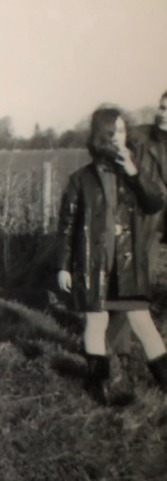
As our minds drifted back, we became, once more, those teenage girls, whose essence rests still just beneath our skin, the music taking us back down the years to the Palladian mansion, the rickety beds in cold dormitories, meeting boys at Old Wardour Castle, smoking in the rhododendrons, taking a bus to our brother school, Bryanston, for choir, a dance, or science, the freedom we enjoyed, the giggles and friendship. Afterwards, we shared the memories that had been stirred: being allowed to watch Top of the Pops in the Library on a Friday evening, a visit from the Liverpool poets, a walk with the poet Stevie Smith. In the background of our lives, of course, was the all-pervasive Beatlemania of the times, running away to see the Stones, marching against the bomb in fear of nuclear extinction under Russia’s continuous threat, questioning the pros and cons of Communism.
We remembered waving goodbye to our mothers at Waterloo Station that first term, with no idea what to expect at the end of that train journey. Then waving goodbye to one another that last term of July 1967 with no idea how life would unfold, knowing only that we were supposed to work “until” we found a husband and got married. There was little mention of career or profession.
We had shared five formative years together and yet, meeting again, knew little detail of what had become of those in our year group, what each had made of our ‘one wild and precious life’ as Mary Oliver describes it, what life had meant to us individually, nor how much joy or sadness had been experienced. What we did now consider, though, through nervous laughter, was what we might wish to make of the next stage of the journey of our lives, the end stage, and what kind of reinvention of ourselves might be required. We also wondered how bossy, or not, we might choose to be with our offspring about what our own Memorial Service should constitute – but hopefully that won’t be for a few more years yet!
I am in the process of downsizing and decluttering. It’s a busy time. Listening to Radio 4’s Last Word recently I heard about a Swedish author, Margareta Magnusson, who had died. She had written a book called The Swedish Art of Death Cleaning. Ah, I thought to myself, so that is what I am doing. Actually, not a sad thought. It’s really quite liberating taking things I no longer need to the tip or charity shops. But I have one problem …
How have I ended up with 6 suitcases in my garage? All different sizes and shapes? All for myself? As my poem, Packing, describes …
Packing
What made me imagine that in 90 degrees I’d need 10 pairs of tights or 6 shirts with long sleeves? My suitcase is full of all colours and hews and all that I’ve worn is a bikini and gold shoes. Others can do it: take one little case but for me it’s a trunk full of options … “just in case”.
That’s how I think. “What if”…this…”what if” that…” or “just in case…” (what a pun!). I used to travel so often, for pleasure and work. I had my neat little black carry-on case, oh so professional, that would just hold my laptop and maybe the laptop projector that I often took with me “just in case” my client didn’t have one that worked.
Then when I had my flat in Nice for 10 years, I had another slightly bigger carry-on case as I kept most of my clothes and necessities in the flat but nonetheless always needed to take a few extra clothes and books, and the laptop, inevitably, “just in case”.
And of course, a bigger case or two for those longer holidays somewhere exotic – Zimbabwe, Australia, Guatemala, Brazil, Argentina, Cuba, our road trip across the American South, Memphis, Nashville and on to Savannah and oh so many more places I have been lucky enough to visit. These days I don’t get out enough, yet those suitcases sit there looking at me, “just in case”.
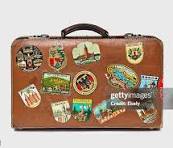
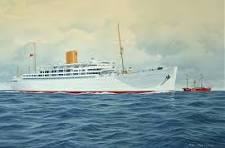
I remember the cases my parents had as they chugged their way back and forth from Lisbon to England. Brown leather and white leather cases littered with exciting looking labels. The RMS Andes is the ship that took us back and forth. I don’t remember having a case of my own – not like today’s children with Peppa Pig cases and pretty cases on wheels and now cases with wheels AND a scooter attached.
Then going off to boarding school. My mother packing a trunk that would go ahead of me on the train to Dorset It was a big old thing. Probably a good 3ft by 2ft? What on earth did she put in it I wonder. But I guess I was going to be away for the whole term
Then there was the tuck box. A sturdy wooden box into which I secreted sweets, toys and personal things like my diary and books. This carried on right through my teenage years, of course, going back and forth to Wiltshire.
What amazes me is how long it took the human race to put together two items that had existed for millennia – the suitcase and the wheel. They certainly hadn’t managed that moment of invention when I went on my first solo trip to France when I was 14. My parents went through an agency called En Famille where you were basically a paying guest in a French family. I was put on a plane at Gatwick to some tiny airport near Calvados, northern France. No-one was there to meet me. I sat in the tiny office of one of the airport staff while they tried to contact the family I was staying with. I remember feeling both embarrassed and anxious.
Hours later he eventually came but when it was time for me to return to the airport they sent me off on the local bus. I can still remember it now, having to change twice, once in Caen, and trying to find my way across unknown French city streets on a hot sunny day lugging my big case – with no wheels – across town to find the next bus stop. Thank heaven I got back to the airport in time for the plane. Looking back on it I think that family were irresponsible, just in it for the money. There was no French conversation or education, as mealtimes were spent watching William Tell dubbed into French.
Now that I am decluttering, I shall have to be ruthless. But which one to throw out? When I look at each case I can see I might still need it because “what if” x happens then I might need that one and “what if” y happens then I might need that other one…so I’d better keep them all hadn’t I, “just in case”?